Best of GMI · the ten canonical essays · 03 of 10
THE SOVEREIGN CRISIS · 2011
The End Game.
If every one of the smartest people in the room is right about their own theme – then the conclusion is far bigger than any of them dares to predict.
FROM THE GMI ARCHIVE · EXCERPTS
EXCERPTED FROM TWO 2011 ISSUES OF GMI:
UPDATE · AUGUST 2011
UPDATE · SEPTEMBER 2011
PART ONE
Okay, This Is Now Getting Extremely Serious
The precursor. One chart flips the light on – and the whole Western banking system comes into view.
This is not an update I want to write. It makes me very uncomfortable to make such a definitive statement but, ever since early last week when I uncovered a few things, even though I am considered somewhat bearish, I suspect I have clearly not been bearish enough. This is nothing to do with the recent price action (which as you know was pretty much expected).
My core view for some time has been that we are going to go through the largest series of sovereign defaults in history. It is not so much the number of defaults but the sheer size of these defaults that will make history. I also expected some banks to go under. This view in itself is rather cataclysmic, but I’m now officially changing my view.
Change of view
I now think that we are headed for the largest-ever financial and economic catastrophe that the world has ever seen.
I truly fear that the world’s financial system is going to shut down almost entirely for a period of time, bringing world trade almost to a total standstill – that is, unless something dramatic changes very quickly.
The problem is that I have absolutely no idea what could stop this apocalypse from happening.
Clearly, I have to remain flexible but I honestly don’t think anyone has put two and two together. Once you do, you too will break out in goose bumps. I make this statement out of fear induced by doing a lot of research into the economic backdrop and the world’s financial situation, and then figuring out the chain of events.
The worst chart in history
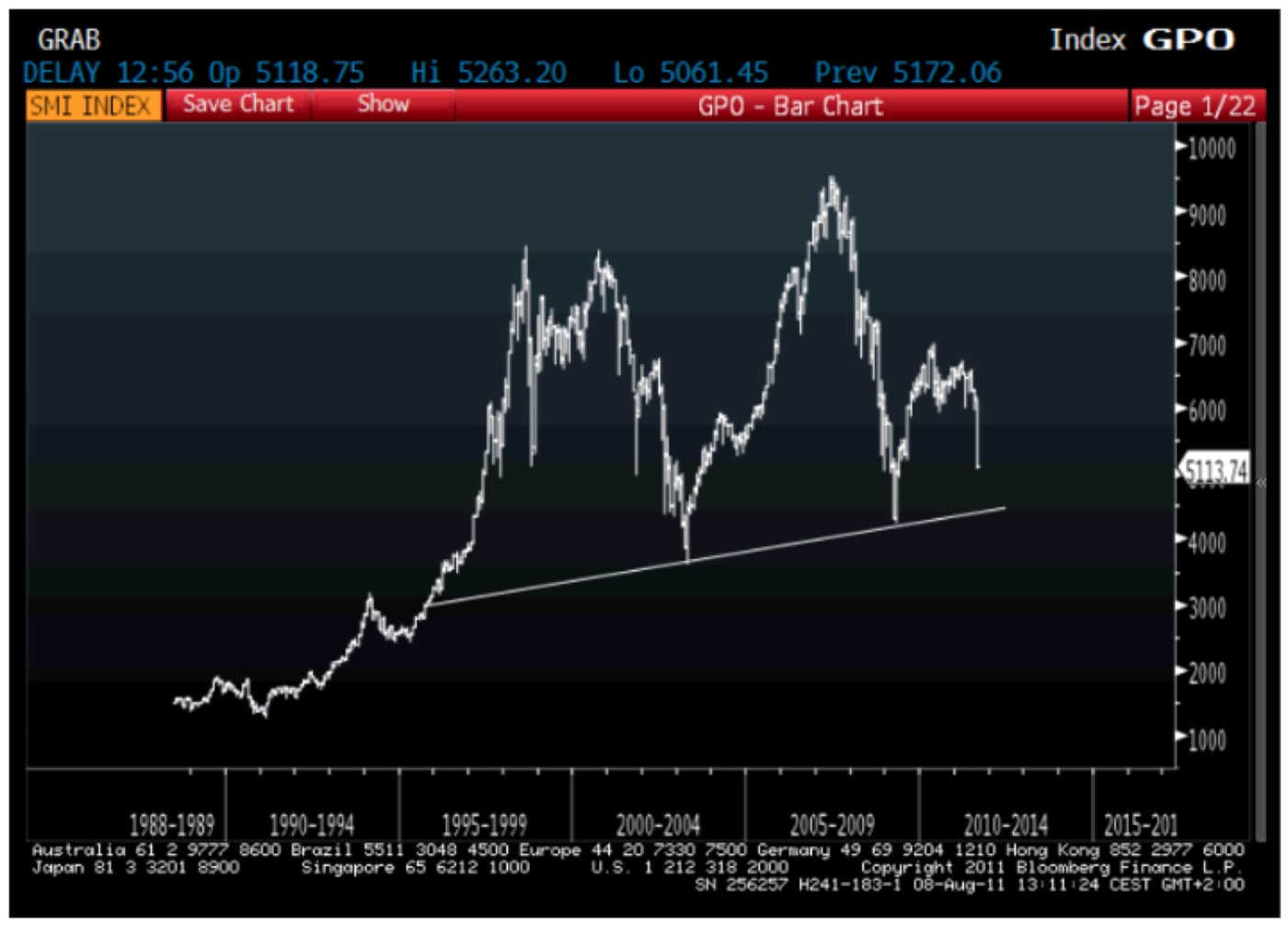
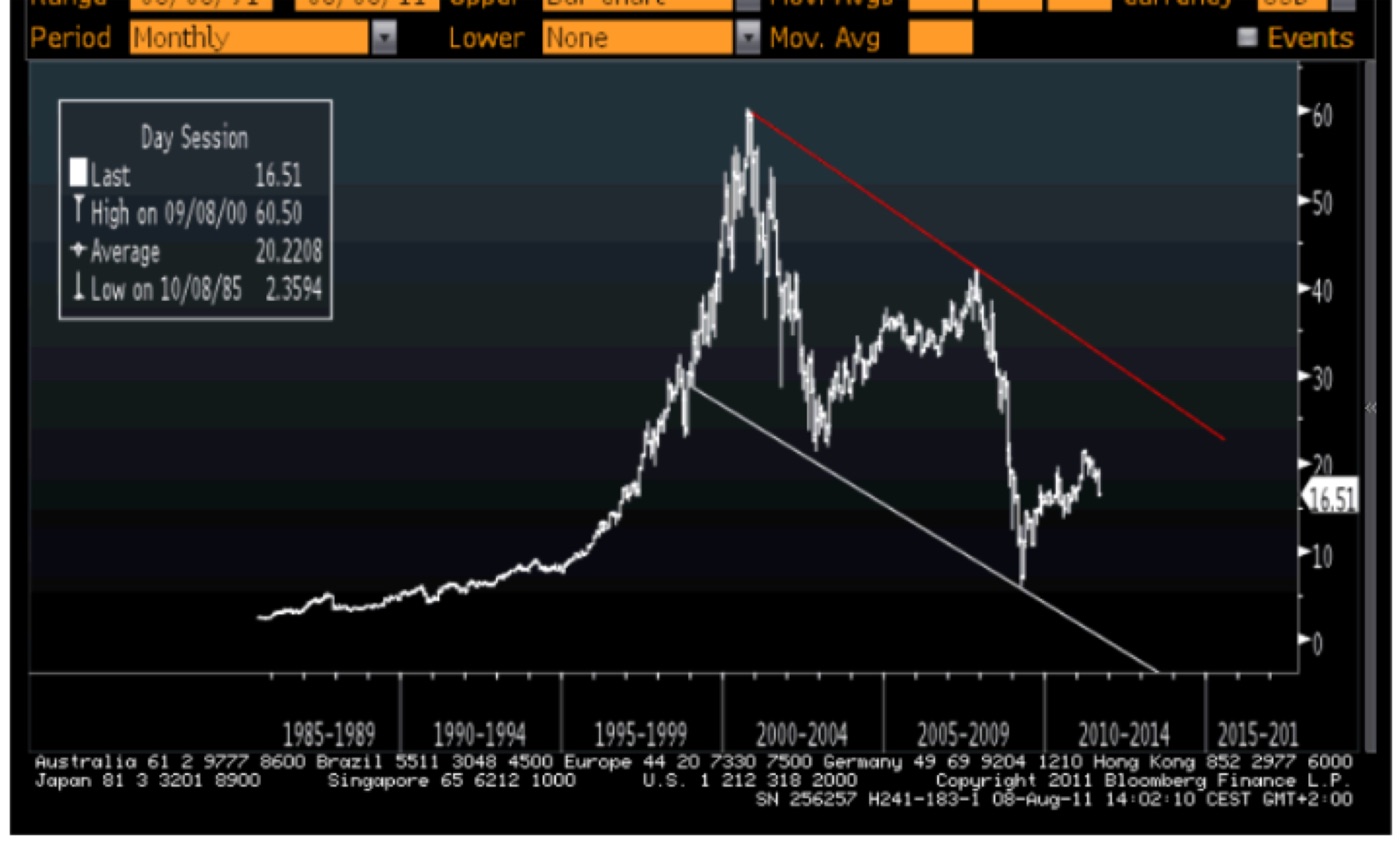
Firstly, early last week I came across one chart that made the light bulb switch on. It is the monthly chart of the SMI (the Swiss equity market index). This chart is the largest EVER head-and-shoulders top of any asset class in history.
So what? The Swiss market is tiny…
I’m sure many of you will think, “So what?” Well, this chart foretells the total collapse of the Swiss financial system. It suggests that Swiss equities will fall 90% from their peak.
This is monumentally important
This is incredibly important. More important than any other chart I’ve ever seen. The reason why is that the collapse of the Swiss financial system is the end of the world’s financial system. Switzerland is the world’s safe haven. Trillions of Dollars are stored within Swiss banks. It is kept there for safety – be it safety from the taxman, from prying eyes, from the EU situation, from the US, from anything.
This chart tells me that there will be no safety. Trillions of Dollars, Swiss Francs and Euros are going to either get wiped out there or will rush for the exit. This chart is the rich man’s panic. This chart is total wealth destruction. We are 12% away from breaking this neckline. (Cue goose bumps…)
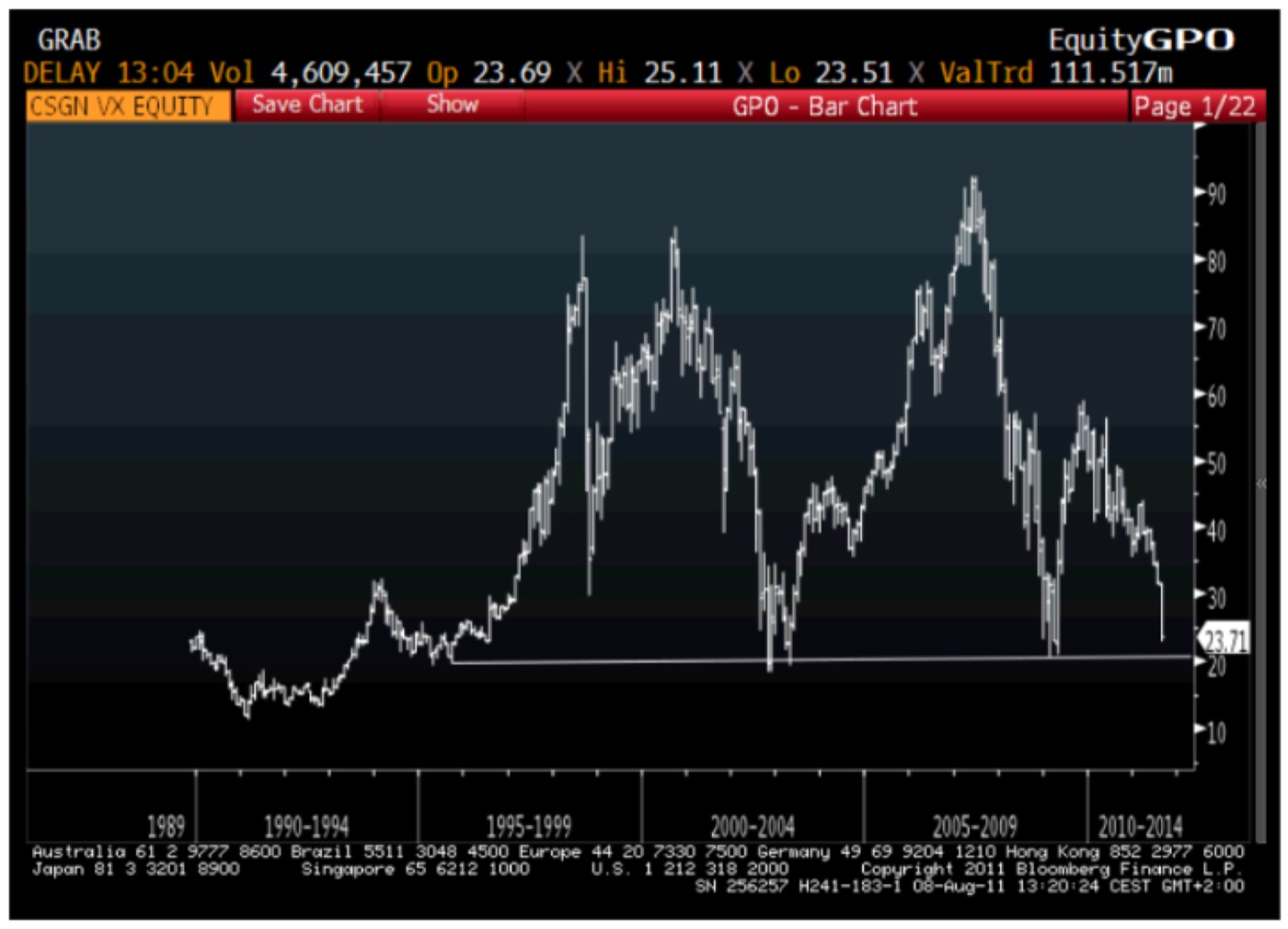
It appears that Credit Suisse is about to go into its death spiral. We are so close to the big break it terrifies me…
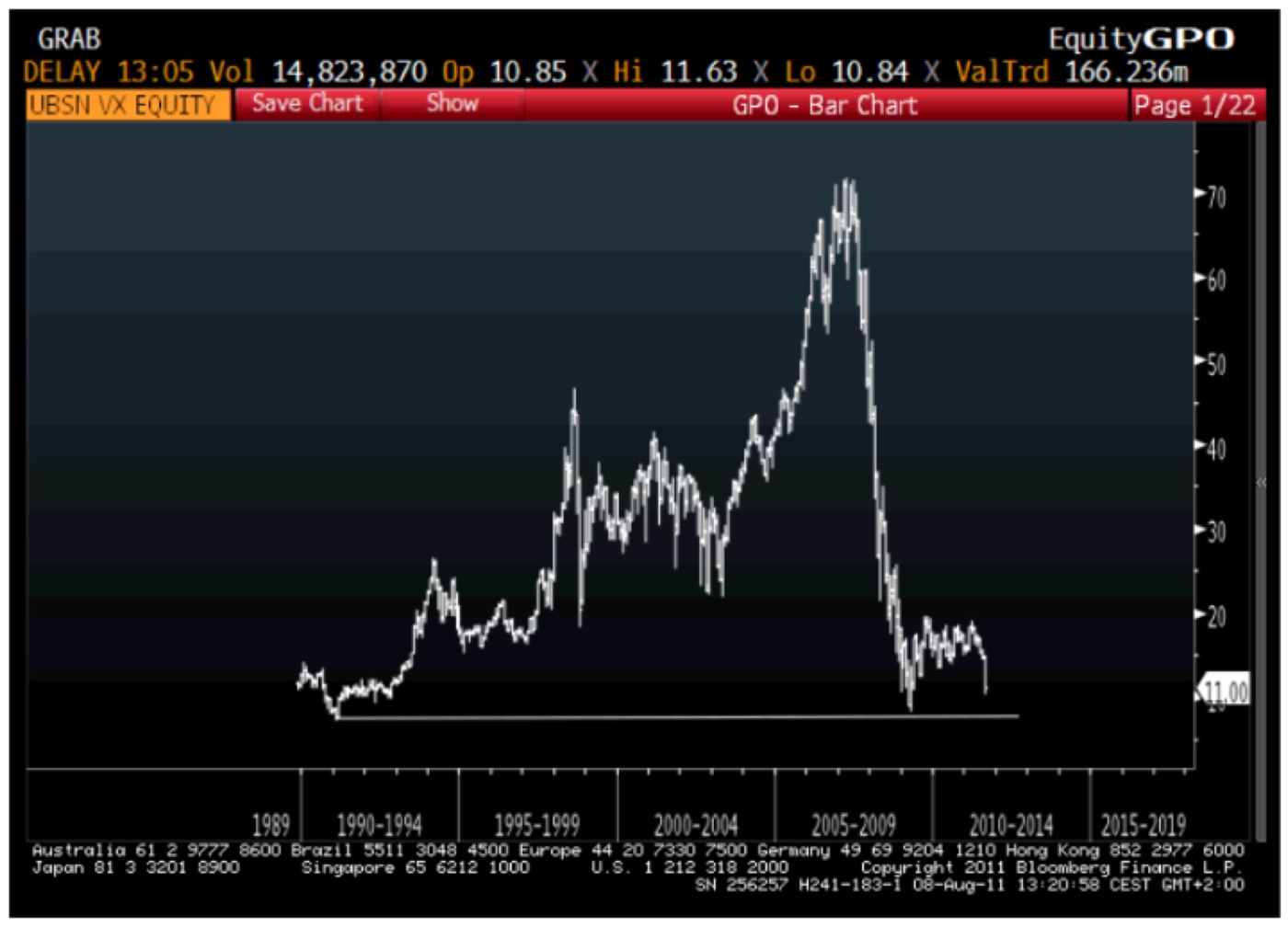
UBS is there too. The end of UBS is writ large, it pains me to say…
No way out
The Swiss Government will be trapped. They have to try to save the banks but they don’t have enough money. They probably need to spend the money supporting their other banks. This is going to get ugly. There is no other way to put it. But if it were just the Swiss banks then I would consider the argument that it is containable. But it is not.
It’s not just Switzerland
This Swiss situation prompted me to look into every single bank chart in Europe and in most other countries in the developed world. The results of that were the nail in the coffin. Of the Eurostoxx European Banks Index, a full 70% of all bank charts were suggesting that they too were going to go under. 70%. Let me run you through a few examples…
Société Générale is going to go under, according to this chart…
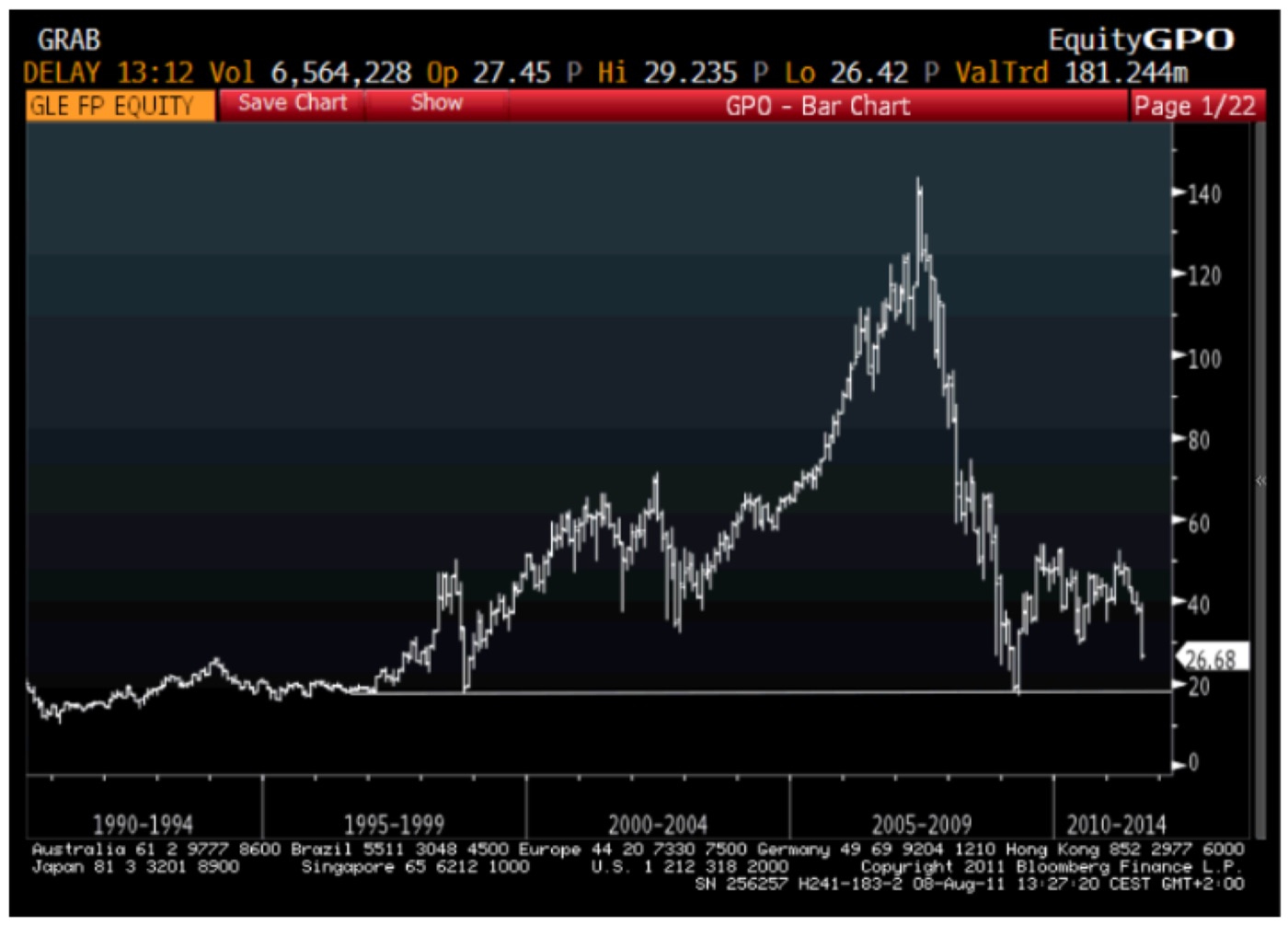
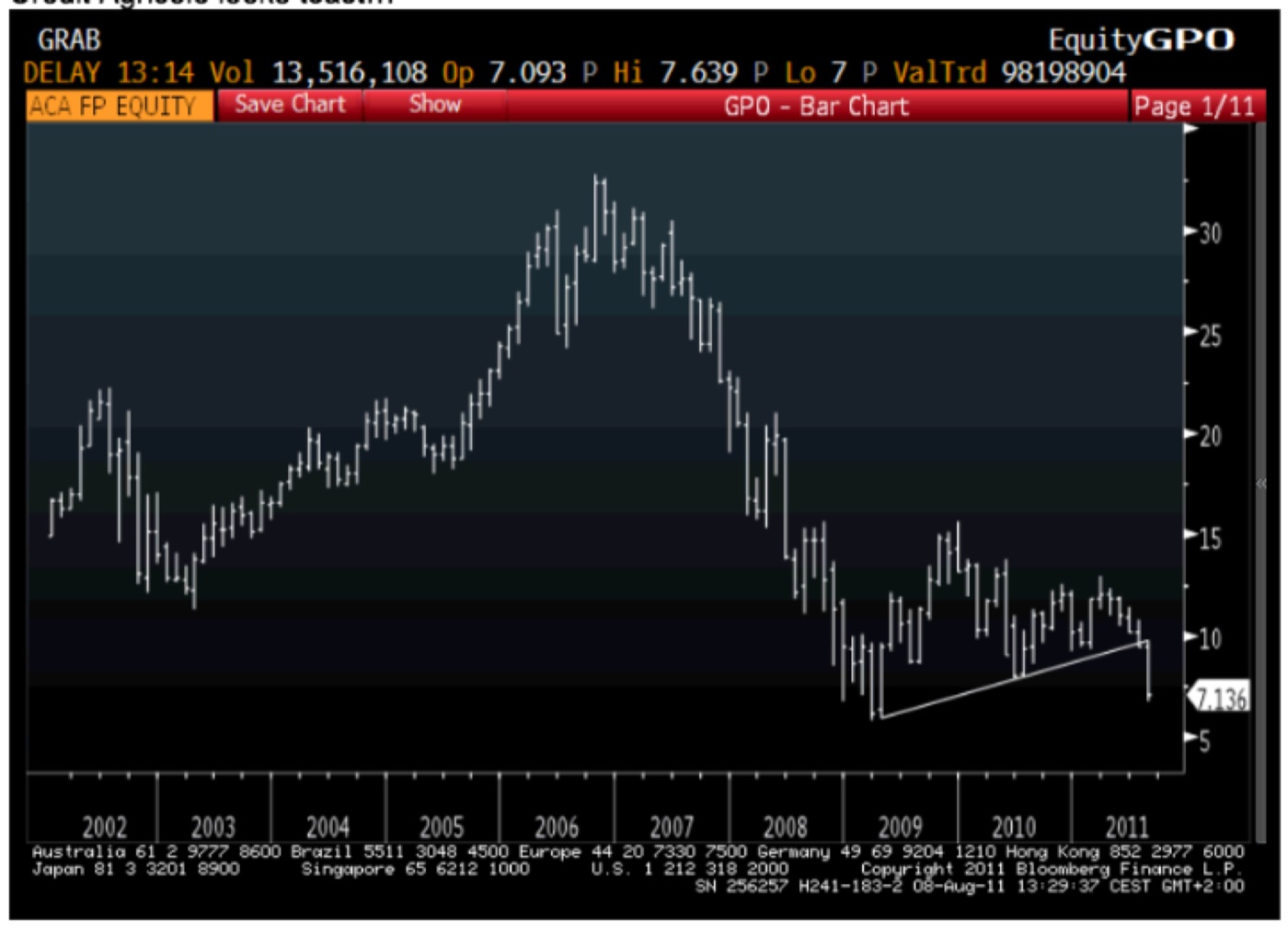
The other big French banks are less close to the edge, but are forming similar patterns. If these two go then the rest will likely go too. That, my friends, would be the end of the French banking system. Crédit Agricole looks toast…
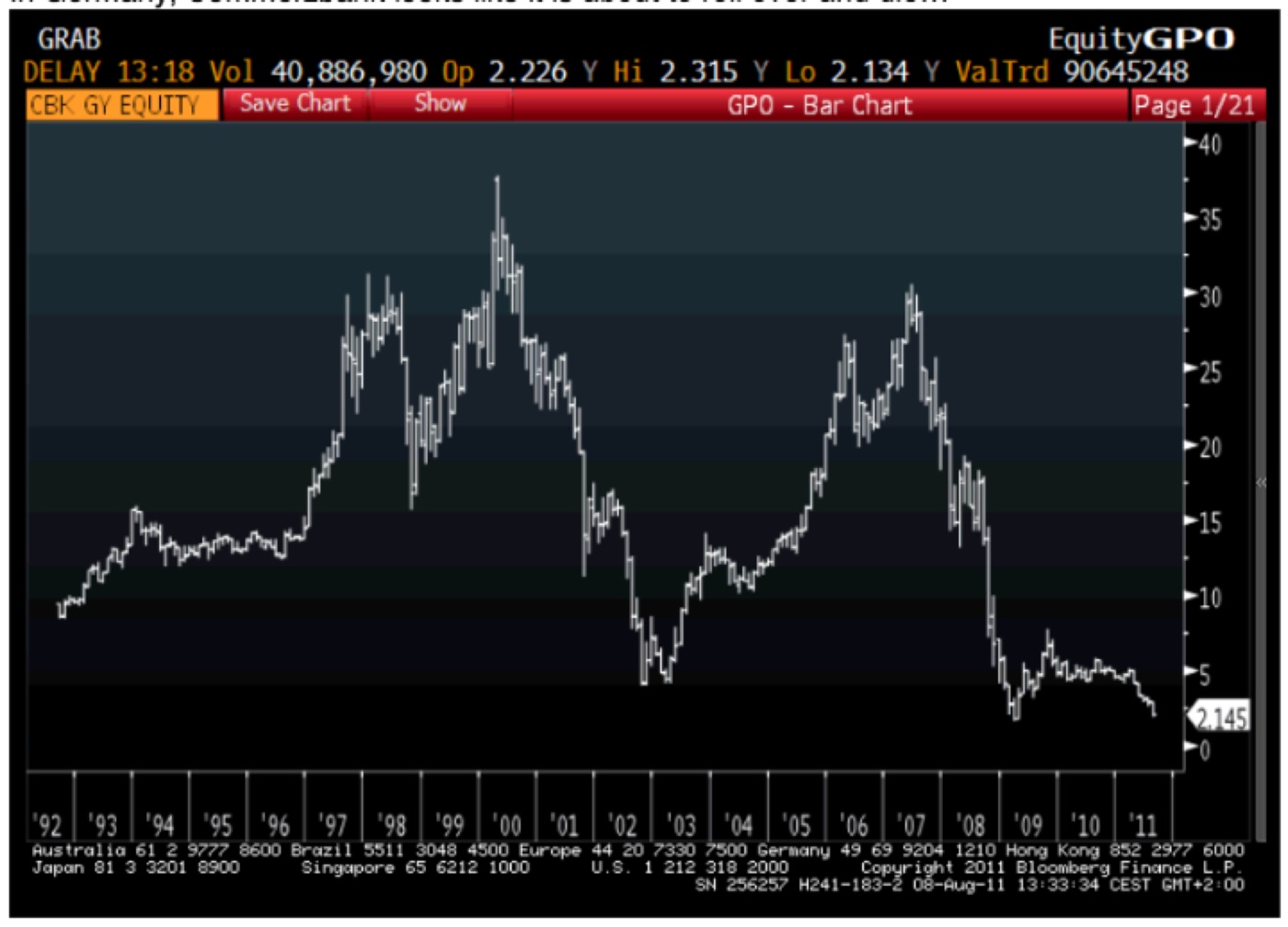
In Germany, Commerzbank looks like it is about to roll over and die…
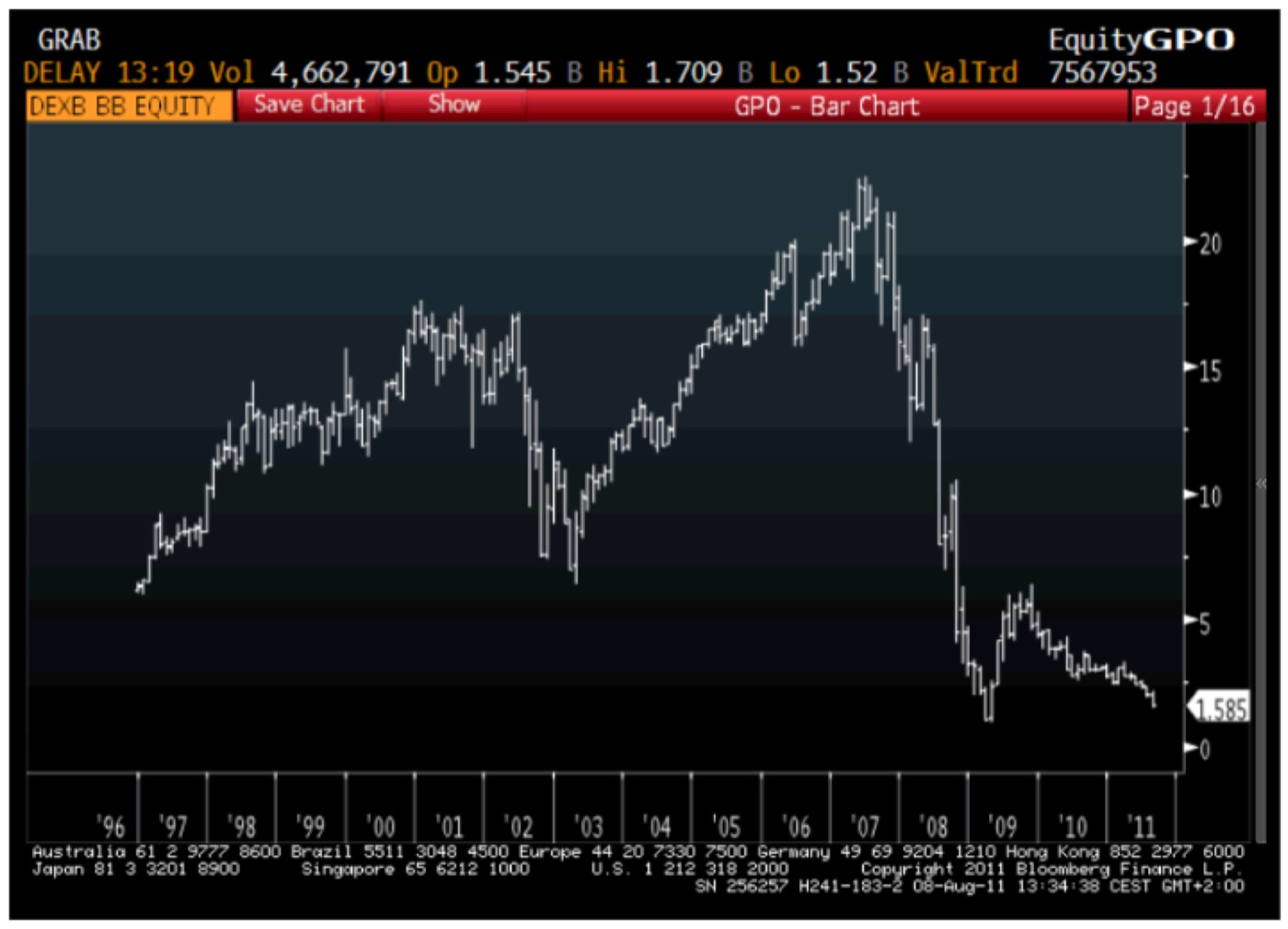
Dexia in Belgium…
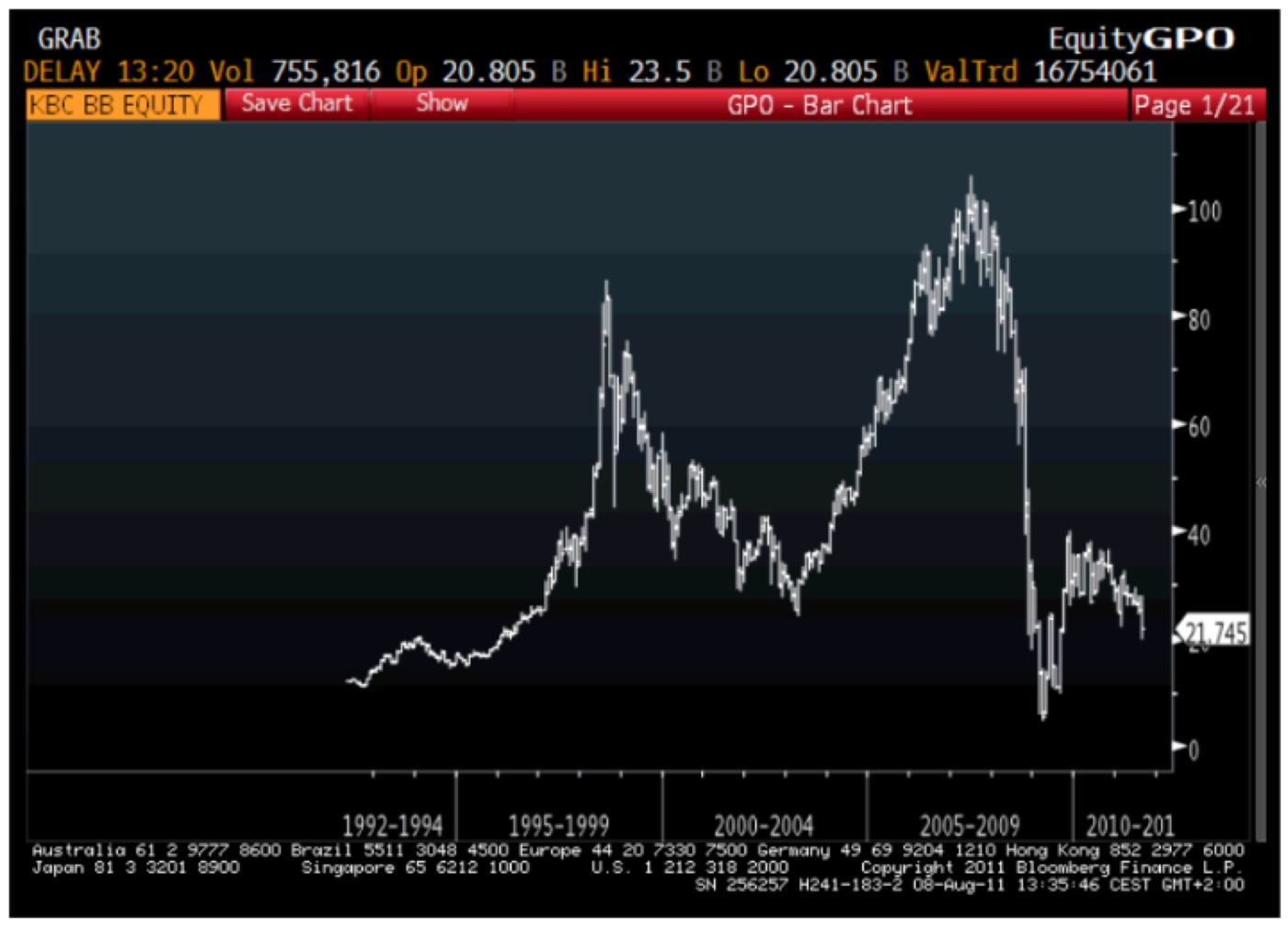
KBC in Belgium…
Raiffeisen Bank in Austria…
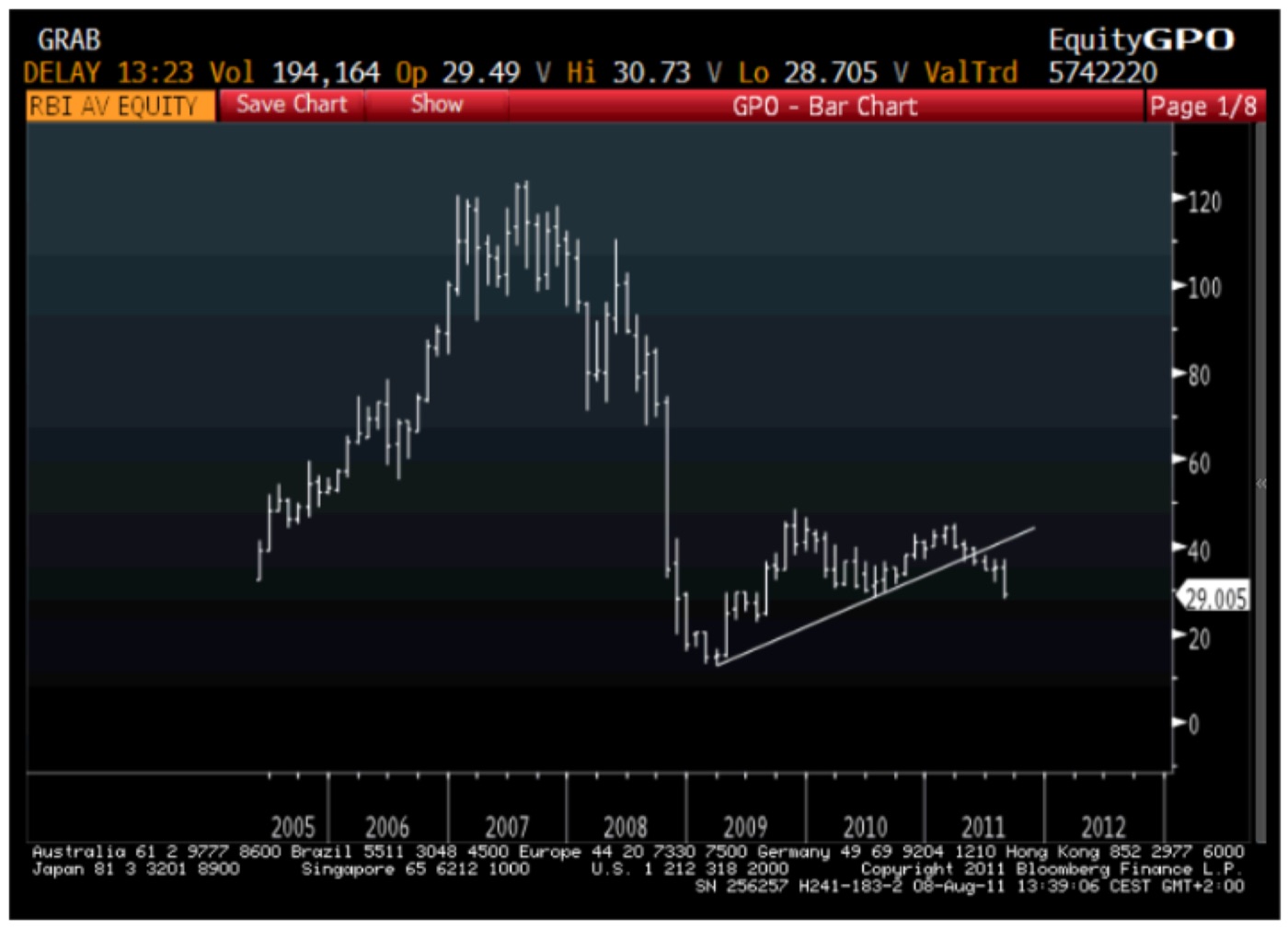
Lloyds in the UK…
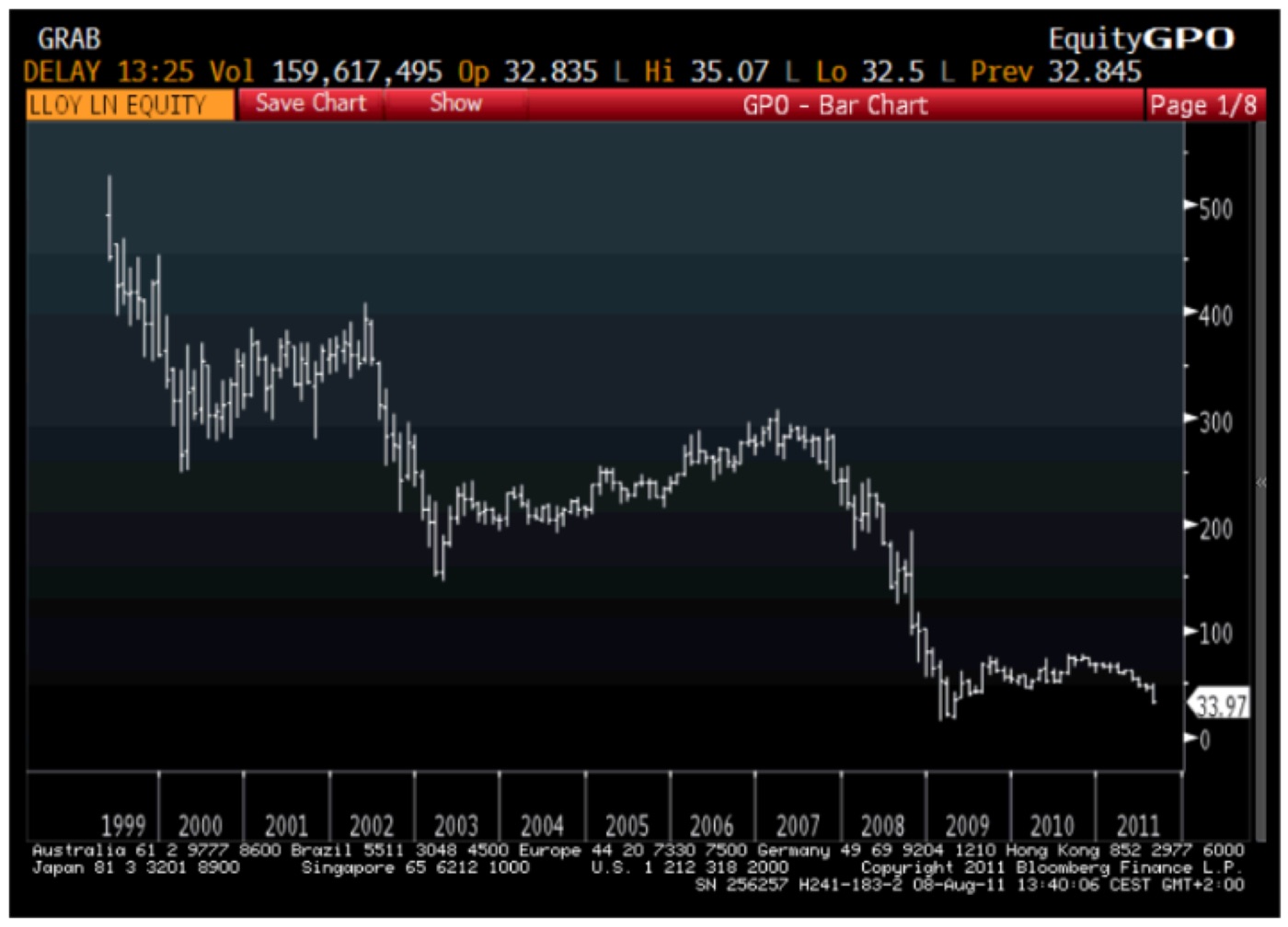
RBS in the UK…
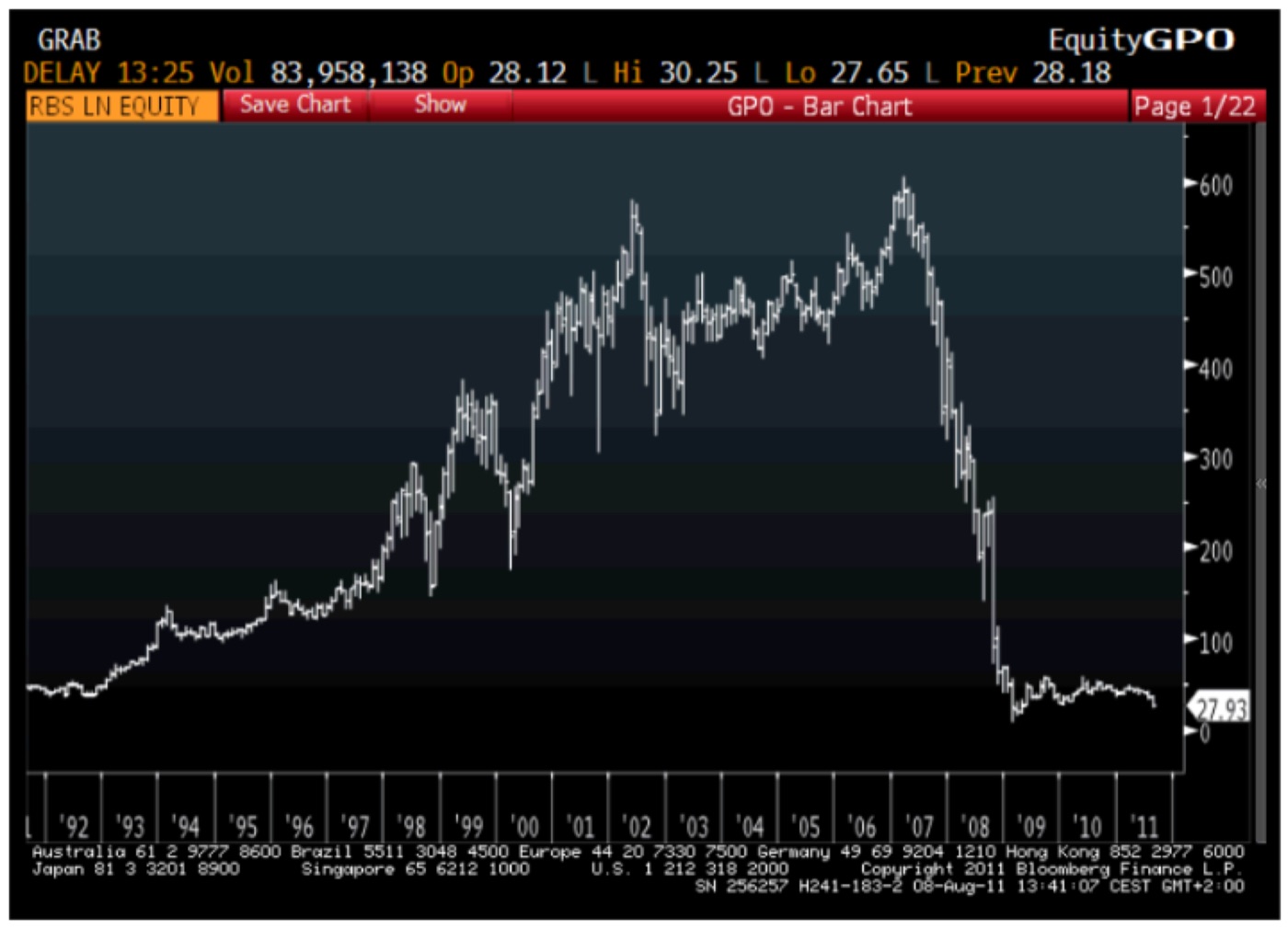
If we then add to this the fact that we KNOW that most of the Spanish banks are going under, as well as most of the Italian banks, the Greek banks and the Portuguese banks, then we know that if this continues the entire European banking system is going to shut down.
There is no government money able to cover this. This is nothing short of the destruction of the European financial system. This is an Argentinean-style total wipe out.
I am sure many of you are short European banks selectively, but I’ll wager that very few of you indeed have yet realised the extent of what is about to happen. Think of all the pension funds, the savings, all the trade finance, all the hedge fund assets, all the prime broking, custody, short-term lending facilities. Just think of the unwind of the derivative books. The swap market. The corporate bond markets. The whole shebang. All gone.
Then look at the global US banks (the domestic banks look much better). Citi…
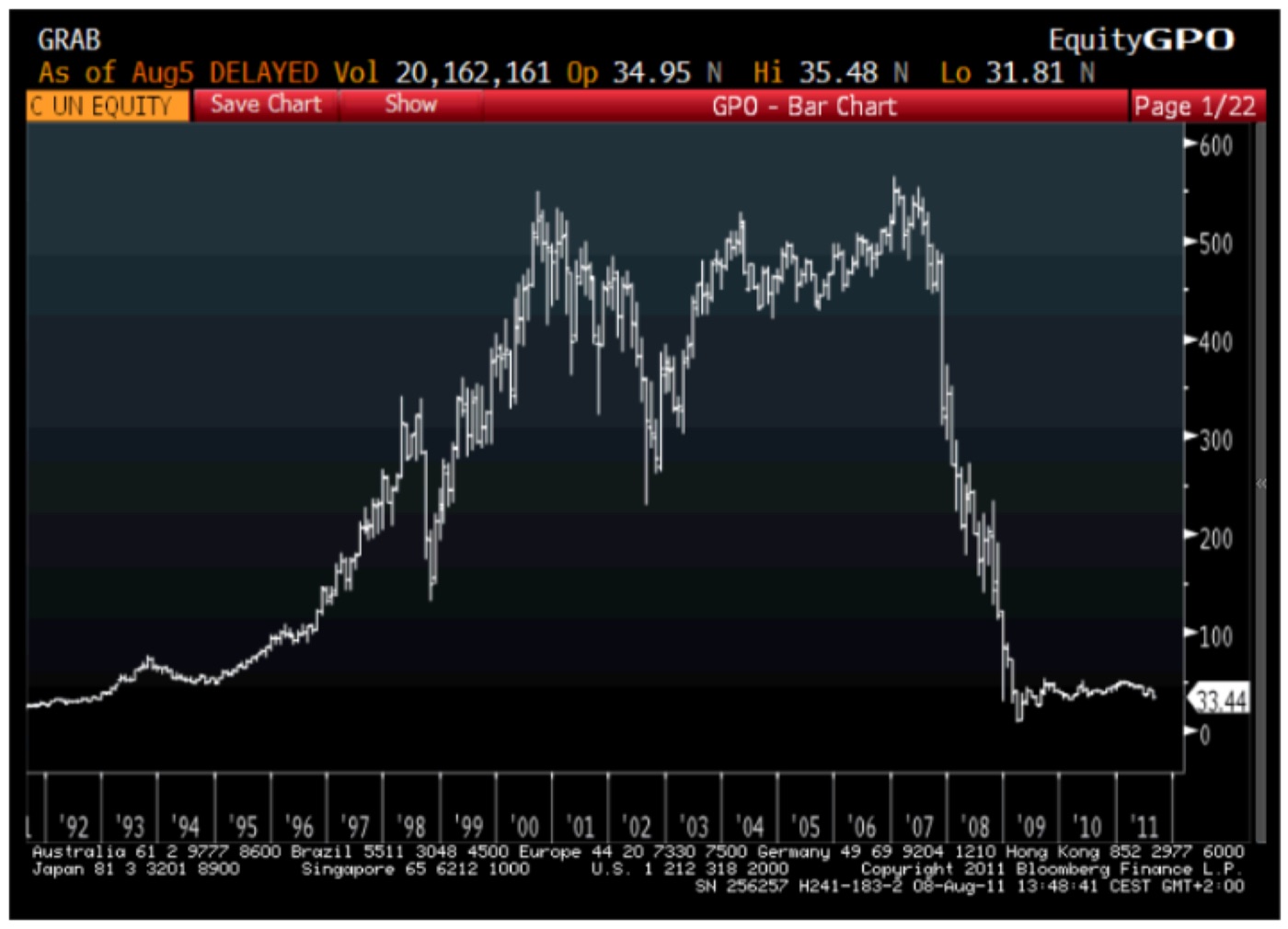
Bank of America…
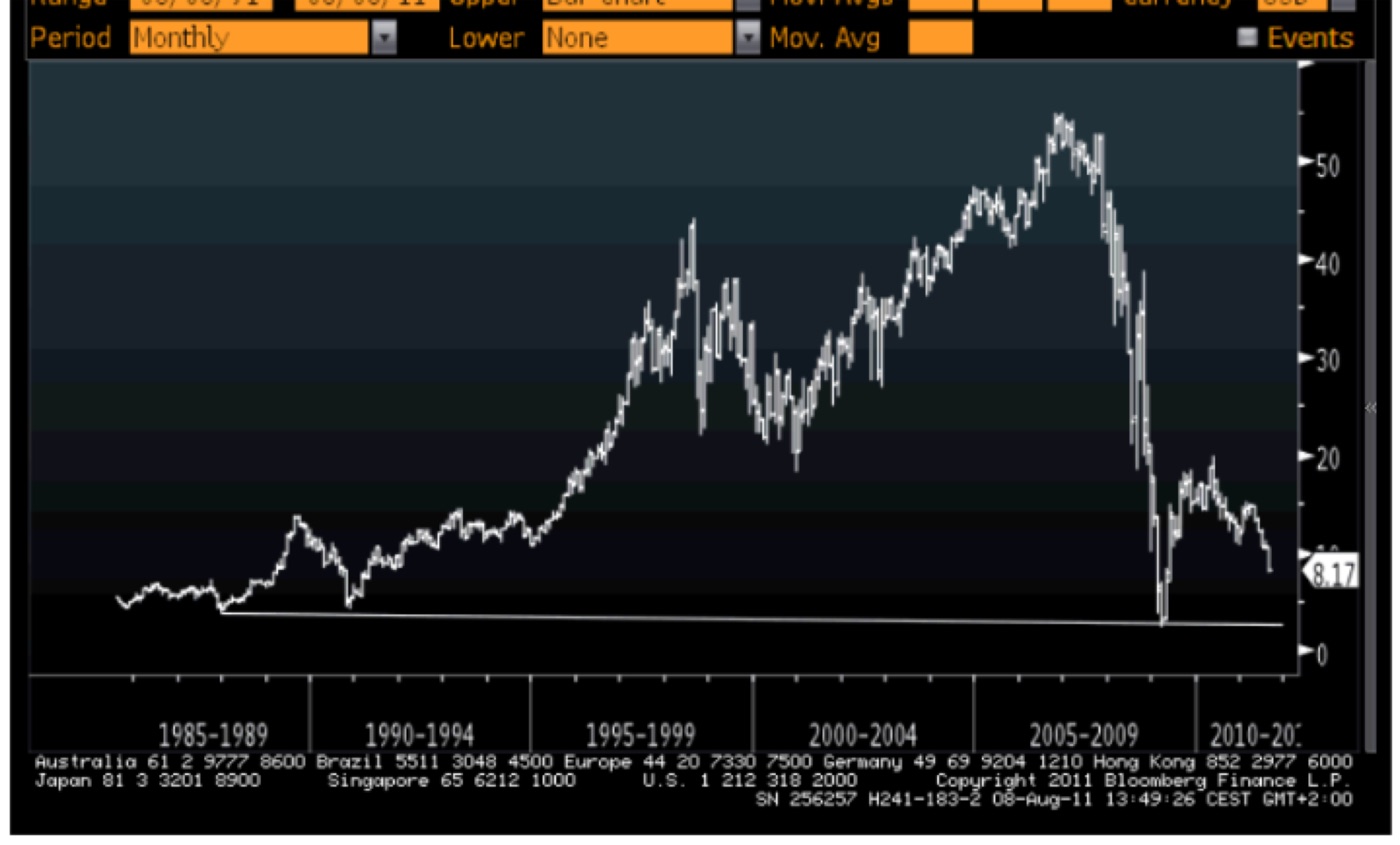
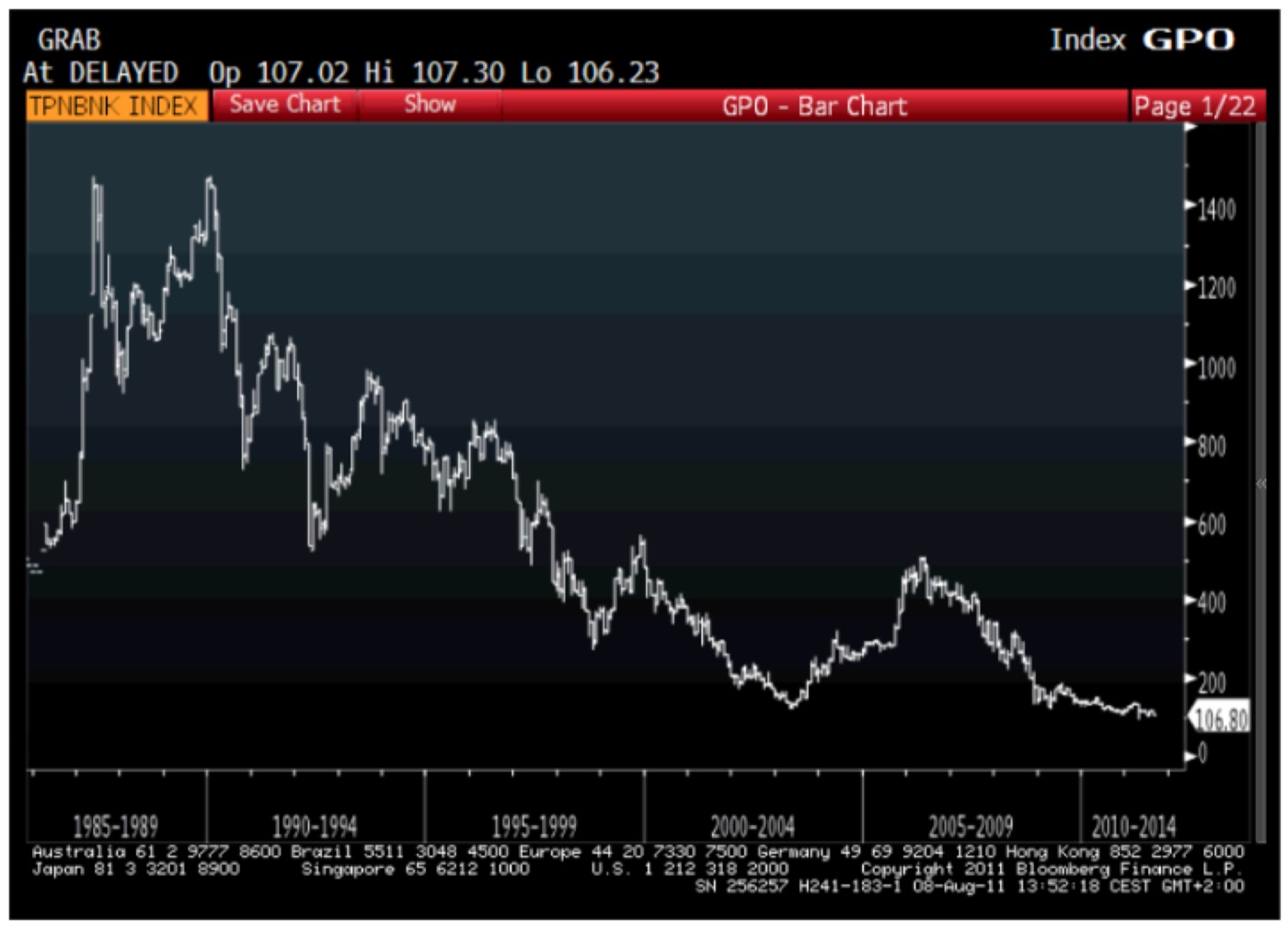
Look at the entire Japanese banking sector (Topix Banks Index)…
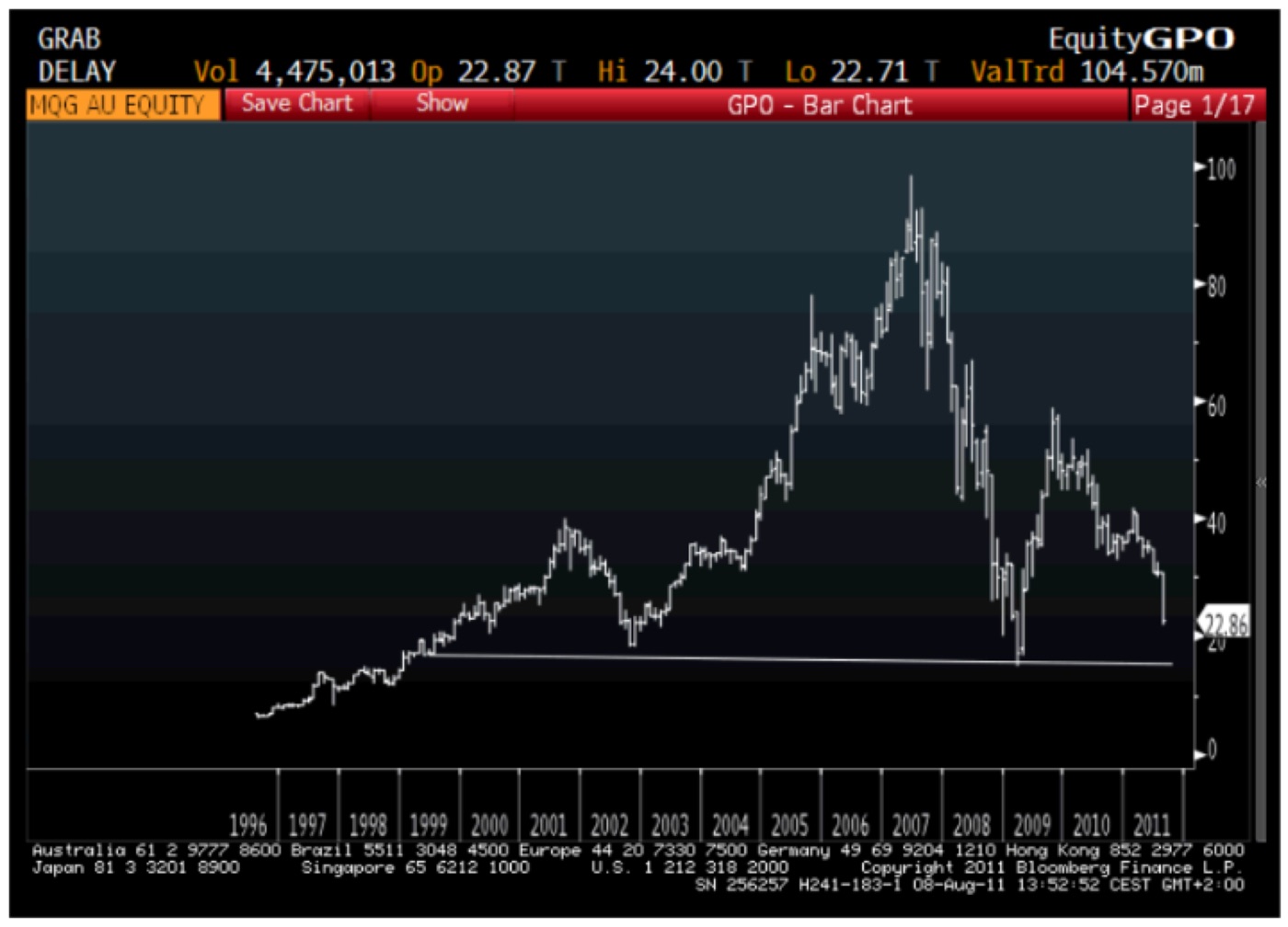
And the Aussie banks, like Macquarie…
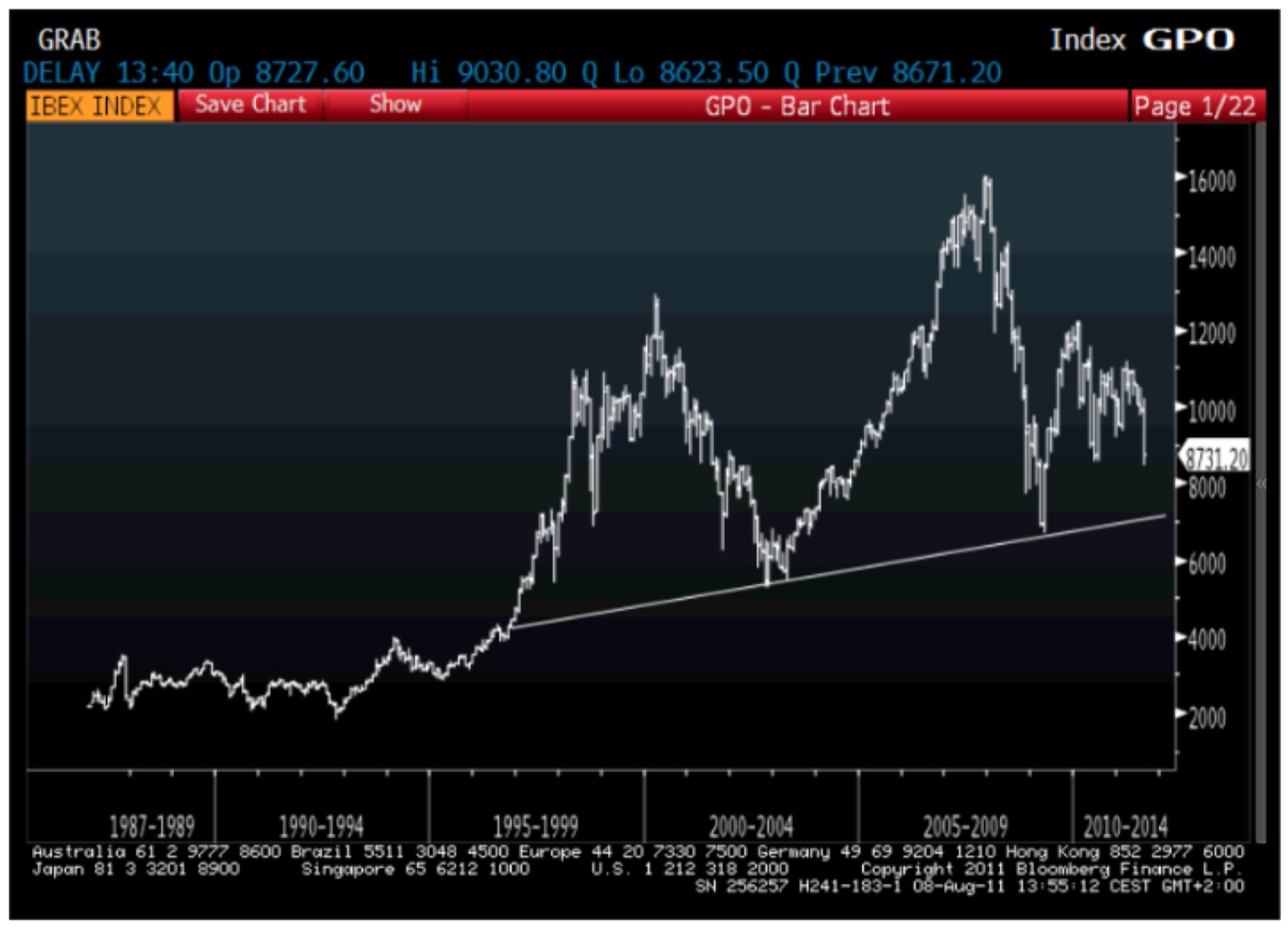
Then look at some overall markets, like the IBEX…
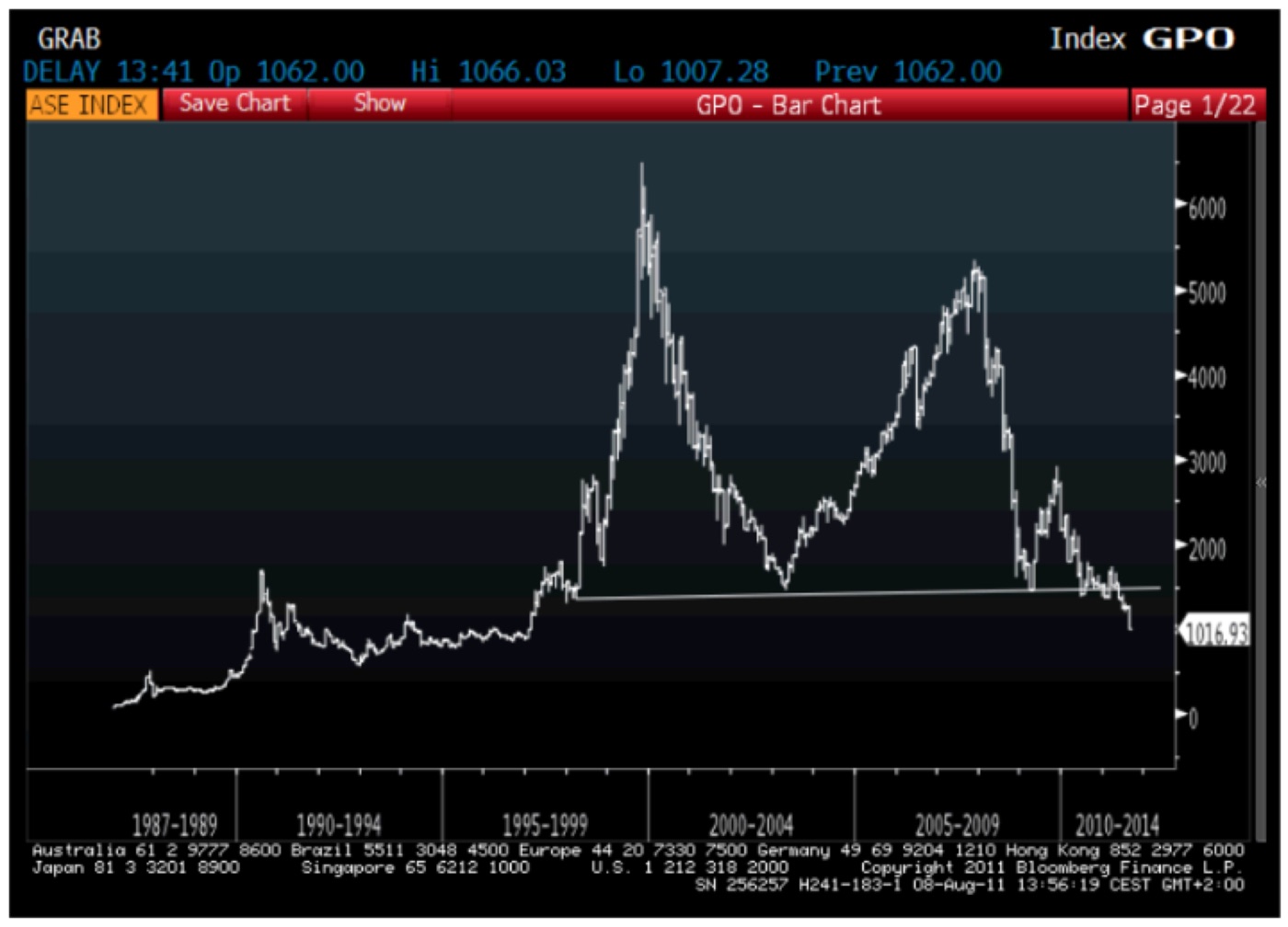
Or the Greek stock exchange…
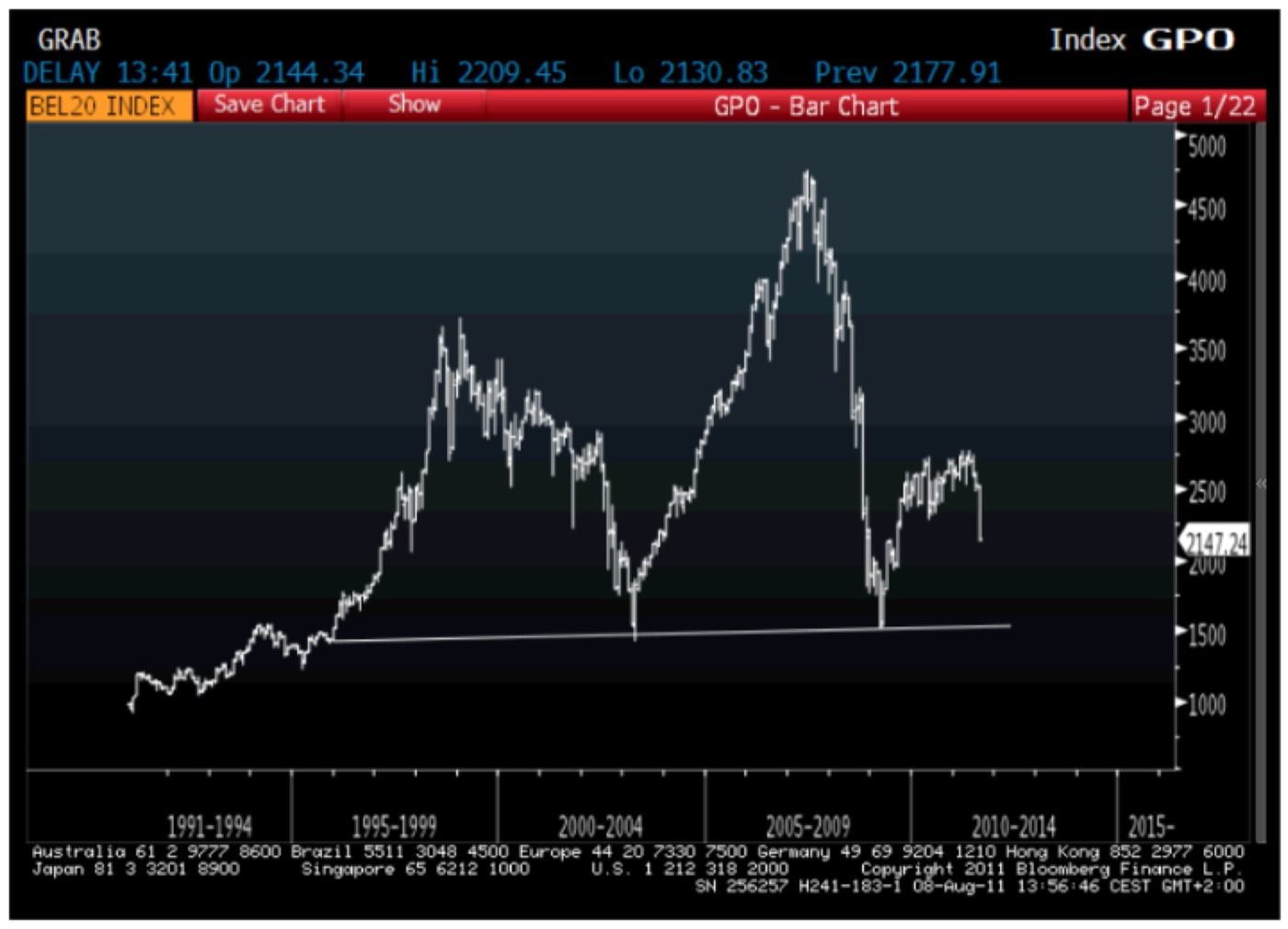
Or the BEL20 in Belgium…
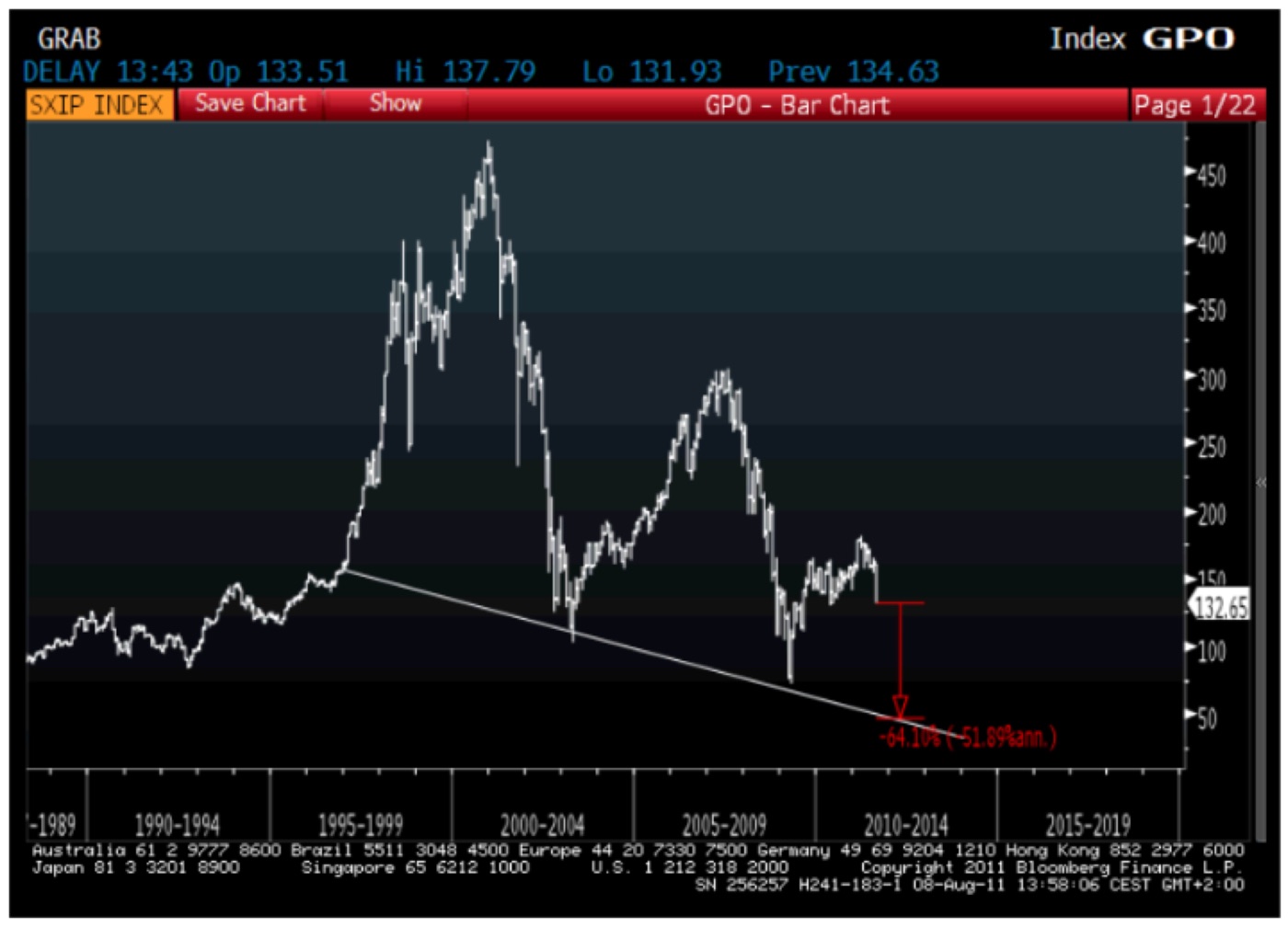
Look at other finance-related sectors, such as European Insurers…
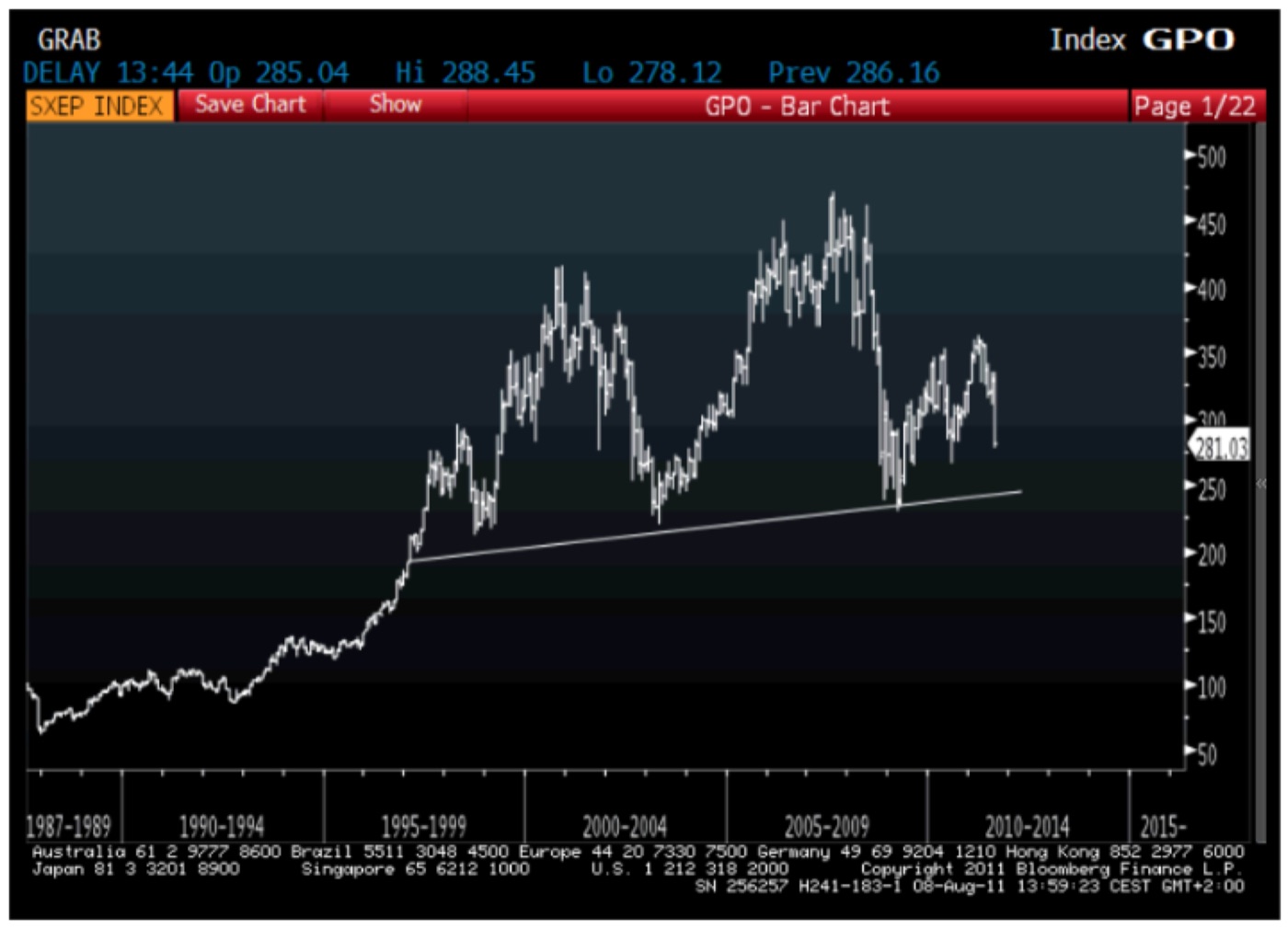
Even the entire European oil sector…
And finally, the world’s most leveraged finance company, GE…
Joining the dots
So, when you join the dots of all the bits of information that we know, we can see that this is easily the worst financial and economic situation the world has ever seen. It is by far and away more dangerous than the situation that caused so many countries to leave the gold standard in the early 1930’s.
Now, this is such a big deal that it’s almost impossible to know what to do both personally and from an investment standpoint. You just have to do your best. Banks will not be able to pay out on CDS (but there is more money to be made first before we close these out) and the derivative market will cease to exist. There will be a panic out of Switzerland and into gold. That is guaranteed to happen. But what on earth can you do with your gold? Very little.
I urge you to keep some physical cash. If the banking system shuts down then you will not be able to move money around, even if your bank is safe. Day-to-day expenditures will become very burdensome. Cash will be vitally important.
What do I expect the authorities to do?
I am sure that none of the current governments understand the full extent of the problem. Just reading the UK papers over the weekend, you can see how much gloating is going on about how bad Europe is while the UK is fine. Don’t these people realise that the UK is the worst of the lot? Well, they may well do so soon.
The ECB sham
This latest ECB bond buying is a bit of a sham. Firstly, they do not have the mandate to buy as many bonds as Italy and Spain need to sell – or the banks need to sell to get off their books. Secondly, they are sterilising these purchases. It is impossible, I believe, to undertake such a massive, possibly trillion Dollar plus operation, and sterilise it. The ECB will not do it in any meaningful size unsterilised, or they will totally destroy their inflation-fighting credibility. Thus, I think what they are doing now is trying to buy a bit more time by scaring the markets, but the total purchases will be small.
The EFSF sham
The EFSF is currently Euro 440bn. There is just Euro 23bn left to spend. After that, they have very little chance of getting more money out of Germany or even the UK. I have always thought – and still do – that when Spain and Italy are at the brink, the Germans will walk away and protect their own. And rightly so.
Total loss of control is still on the cards
So, this little ruse by the ECB and the EU is not going to work and we are very, very close to a total loss of control. That loss of control will be the dawning of the realisation that the entire world’s financial system is at risk of a total wipeout.
G20 is the final card they can play
That is when I expect the final attempt at shoring up the system. I think the G20 nations will get together and try to unveil a G20 ‘shock and awe’ solution of multiple trillions. This may well give markets respite for 3 to 6 months but if the economy worsens, which it will, then even the G20 will realise that they collectively don’t have the cash to deal with this.
2012
Then the total destruction will begin, in 2012. Out of that we will have a new world order and a totally new-style financial system. I understand that this is not nice reading (I feel sick writing it) but I see it no other way. Even if they try to hyperinflate their way out, the end result is the same.
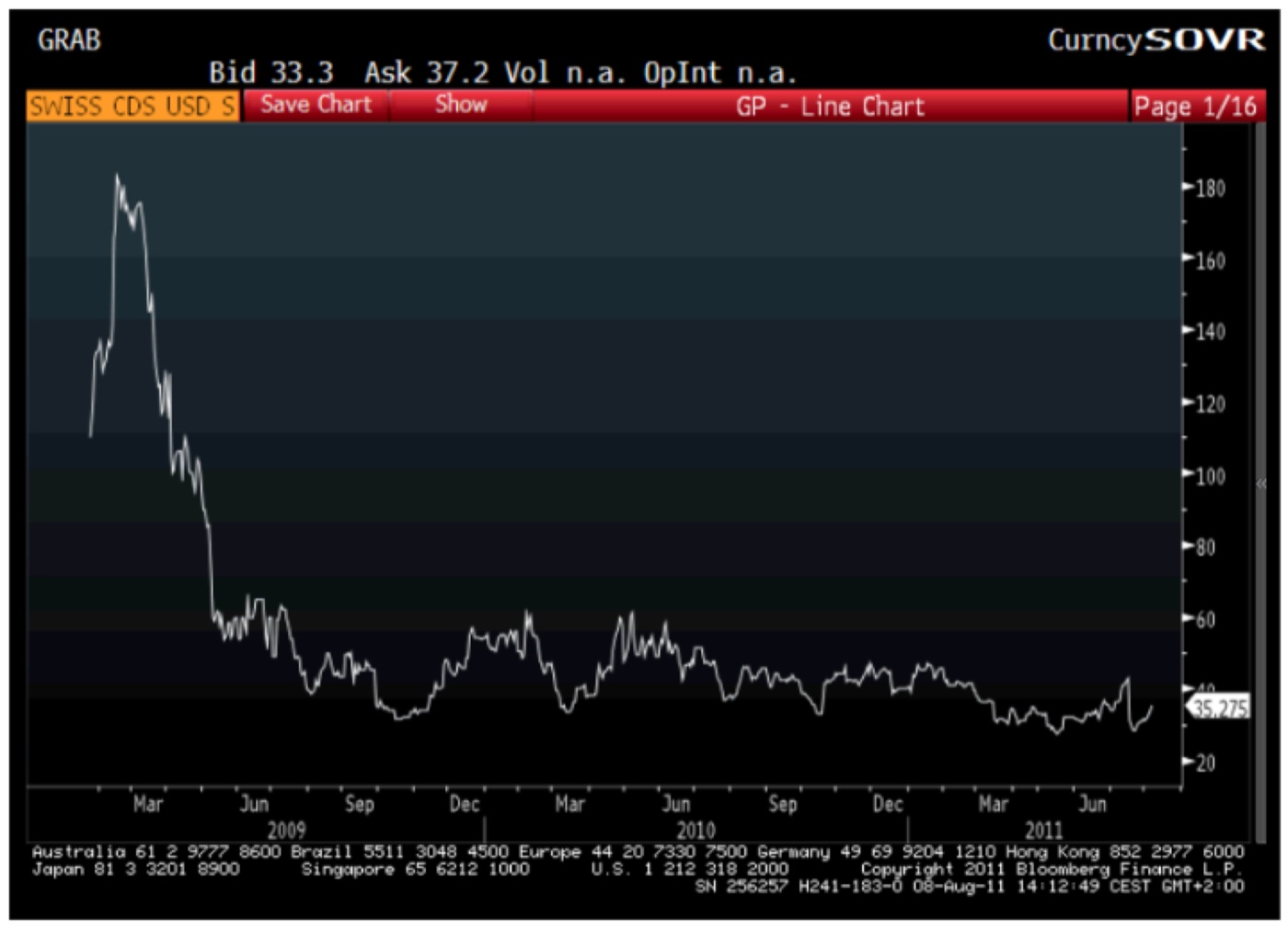
I want to recommend a trade. I wish to buy CDS on Switzerland. Too many people believe that it is a safe haven and it is so far from that. Swiss 5-Year CDS currently trade at 35bps. That is the steal of the century. I think I just proved that earlier in this article…
Again, I will warn you that you will need to get out well before the end game and manage your cash in the best way you can. Not losing money will become the total focus. Good luck, stay safe, plan for the worst and hope for the best. Let’s hope I am completely wrong.
PART TWO
The End Game
A month later, at the GMI Round Table, the thesis gets its name – and its framework.
The mood of the group was generally very downbeat and most people wanted to bounce thoughts and ideas off others as to how to deal with the global financial crisis that is brewing. Almost without exception everyone was focused on the developing European crisis and its potential to spill into other areas of the world. Many wanted to glean ideas as to how to protect themselves personally from a potential shutdown of the financial system.
As I have been writing for many months now, it is very important to spend much more time on these issues. You need to look at which bank you hold your savings in, where and how you own gold, if you need to have some physical cash within easy access and even in which country it is better to be located.
If you run a hedge fund then you really need to spend some time thinking about your business risks. We know that if your prime broker goes under you can lose your money – or at least lose access to it for years (think Lehman). If we get a full-scale financial shutdown (as I expect) then your clients will be panicking to get out. My suggestion is to move your fund outside of the Western financial system entirely. If you take these steps you will at least have done everything you can to make sure that you still have a business in 12 months’ time.
My presentation: The End Game and the Monsoon World
In the first part, I outlined the fact that many people in the room had extremely high conviction on various aspects of the financial Armageddon trade – one guy was sure the French banks were going under, one was sure that China will blow, one sure about Japan, one sure about Italy. All of these guys are hugely respected and intelligent macro managers with proven track records. They were all focusing on their own theme.
If you are all right, then it is the end
The point I raised is that IF all these guys are right on their themes – and I think they are – then the conclusion is a much, much bigger financial event than any single one of them predicts as the most likely outcome. Most people fear joining the very few macro dots because the end conclusion is so bad that they cannot entertain the thought of it. If, however, they are all correct, then there is a high chance that the entire fractional reserve banking system and fiat money system is going to hit the wall.
Argentina is the framework
If this is going to happen then we are going to have to use Argentina’s 2001 collapse as our framework for understanding. In Argentina they shut down the currency market, stock market and banking system – for the best part of eighteen months.
The End Game, Part I
My view is that, if the last-ditch attempts to save the system fail (I think this comes in a month) then by late spring of next year we will see the following:
- Bonds will be useless to trade as yields in safer countries will be at 1% or less. There will be no money to be made.
- Short selling of stocks will be banned.
- Short selling of bonds will be banned.
- CDS will be banned.
- Short selling of futures will be banned.
- Put options will be banned (thus making call options untradeable).
- This will leave us with currencies and gold. In due course, if we head towards the end game, then those will be restricted too.
This means that if the next bailout of the system fails then there will be zero opportunity to make money in the Western markets, and whatever money you have will be what you are left with – and that needs to be in the safest bank. We then have to sit it out and wait for a new system to emerge, which it will. You have six to nine months to make any money. This doesn’t bode well for the hedge fund industry, that’s for sure.
It’s all about the Euro
The one thing is for sure: if I am right the Euro will collapse. If the ‘the ECB can print a few trillion’ crowd are right, then the Euro collapses. After much discussion I think pretty much all the participants thought the highest-quality trade out there in the world right now was to be short the Euro. When we polled people at the end of the session, 94% thought the Euro would be lower in 12 months’ time, with the majority expecting it to be around 1.15.
However, I privately asked people how much risk they had on in the Euro short trade and the truth is that people just don’t have big positions, or any positions at all. Everyone is too worried that the can will somehow get kicked down the road. The fear of getting stopped out is holding everyone back.
Keep it simple, stupid
Too many people are now using tail-risk trades as their core investments. Tail-risk trades are for tail risk and really pay off as we approach the end game, but not to make money in the middle. There were several people in the room having one of their best years, and every one of those, without exception, had kept it simple – long bond futures (US, Australia and Europe), short Euro, short stocks and long gold – all expressed via futures or cash or physical. You need to take some risk to make money.
The Monsoon World
The second part of my discussion was about where the future opportunities lie. I produced a map of the world where I blacked out countries that had debt problems – that took out pretty much all of the Western world. I then blacked out all the countries with bad demographics. What is left is where the secular macro investment opportunities lie.
South America is one clear region, as well as most of Africa, but the single most important area is what I now term the Monsoon World that forms a ring around the Indian Ocean, with India at the centre. This takes in the millennia-old monsoon wind trade routes of the Swahili coast of Africa, North Africa, the Middle East, the near East centred around Turkey, Iran and central Asia, the Indian subcontinent, and down to Indonesia, Malaysia and Singapore.
This trade zone is pretty much self-sufficient, has very low debt to GDP, a very young population and some of the fastest GDP growth in the world, with the highest savings rates and some of the largest pools of capital on earth. This is where I think the future lies. This is where the new banking system will emerge, based closer to a model of full reserve banking, in countries that have excess capital.
In the end, you get paid to take risk. You get paid to see through what others think of as excessive risk but you do not – because you’ve done your homework.
Membership
Read GMI for yourself.
Twenty-one years of calls like this one, and the positioning each month. Explore the research, the platform and the membership options.
Explore membershipRequest preview access