Best of GMI · the ten canonical essays · 04 of 10
THE BITCOIN THESIS · 2013 – 2014
The First Bitcoin Thesis.
From “a digital version of gold” to the basis for an entirely new financial system – the original call, the +480% follow-up, and the idea that dwarfed them both.
FROM THE GMI ARCHIVE · EXCERPTS
EXCERPTED FROM THREE GMI MONTHLIES:
NOVEMBER 2013
DECEMBER 2013
MAY 2014
PART ONE
Bitcoin
A digital peer-to-peer currency that functions without the intermediation of any central authority.
I am sure you are all vaguely aware of Bitcoin (BTC), which was initially something of fringe interest to a few of us. For those of you who don’t know, Bitcoin is a digital peer-to-peer currency that functions without the intermediation of any central authority.
Complex but cool
The maths behind it is so complex and robust that it is well beyond my intellectual abilities to understand it. But those super-geeks who understand its creation and function swear by its clever complexity and robustness. Got it? OK, neither have I. But neither do I understand how QE positively changes the outlook for the world’s
It is because it is
The point is, not how it is created but that it has been created and stands up to the most rigorous testing and analysis. And to me that means that it has a chance of surviving as the medium of exchange for the cyberworld and potentially the real world too.
The rebel’s currency
In essence, Bitcoin’s success is due to the fact that the man in the street understands that central banks and governments are going to take their money via confiscation or default or devaluation, and it is their way of voting against it and them (since gold is not easily exchangeable for them). This is the 99% sticking their fingers up at the authorities and saying we don’t need you or want you…
We are rebels too
There are many of us who share the same fears. We are tired of our money being used as the collateral of others and tired of living in a system that simply refuses to correct its imbalances in any way except devaluing, debasing, taxation and theft. This is why I am interested in Bitcoin.
So let’s look at the price of this new currency… Looks kind of like a bubble doesn’t it? Well, I’m not so sure. After the initial early adopters bought it and it subsequently crashed in 2011, it then rose from a price of $3 to around $227, which is a rise of 7,500%. It then fell 70% before recovering again. A pretty wild ride.
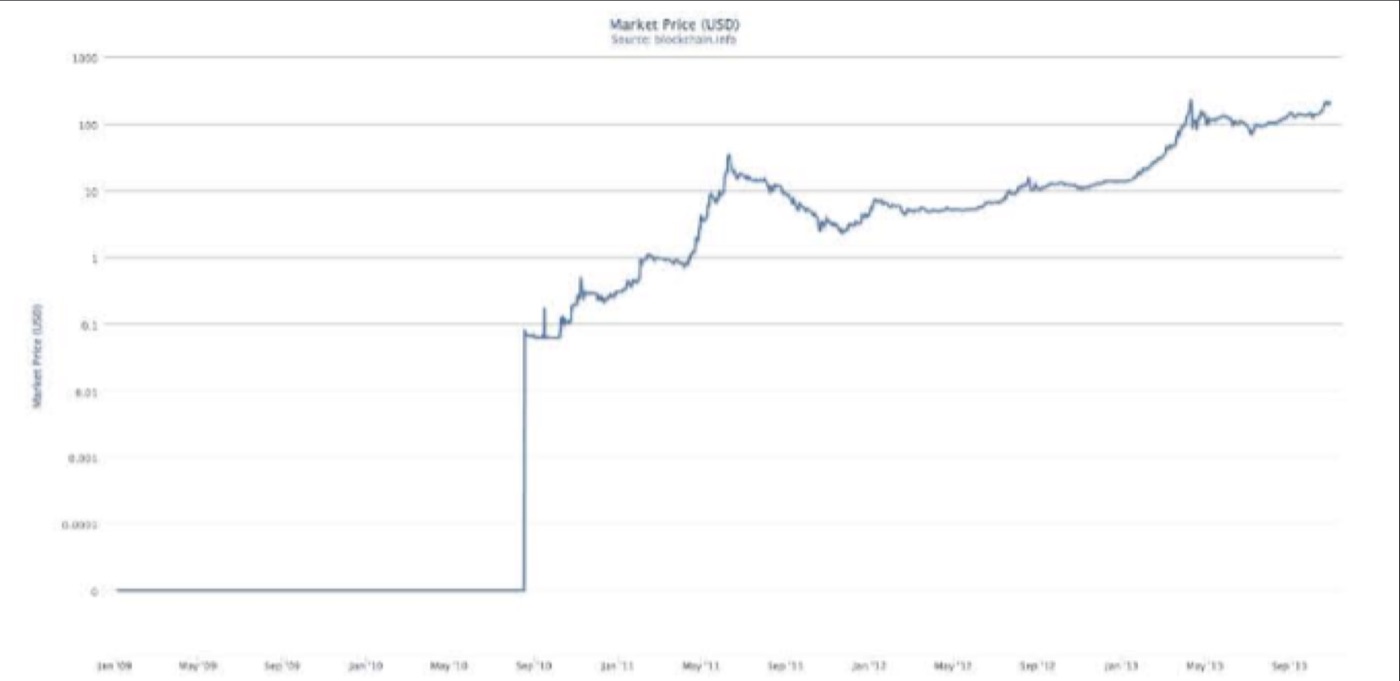
Early stage volatility
But what I know from past experience is that initial stage investments like this are always volatile. But if they take hold then they can go up further than you could ever, ever, ever, ever imagine. Microsoft back in 1986 to 1987 rose 400% then corrected 30% – twice – before rising again. Microsoft eventually topped out after a 44,000% rally from that point. Forty-four THOUSAND.
Looks awfully similar
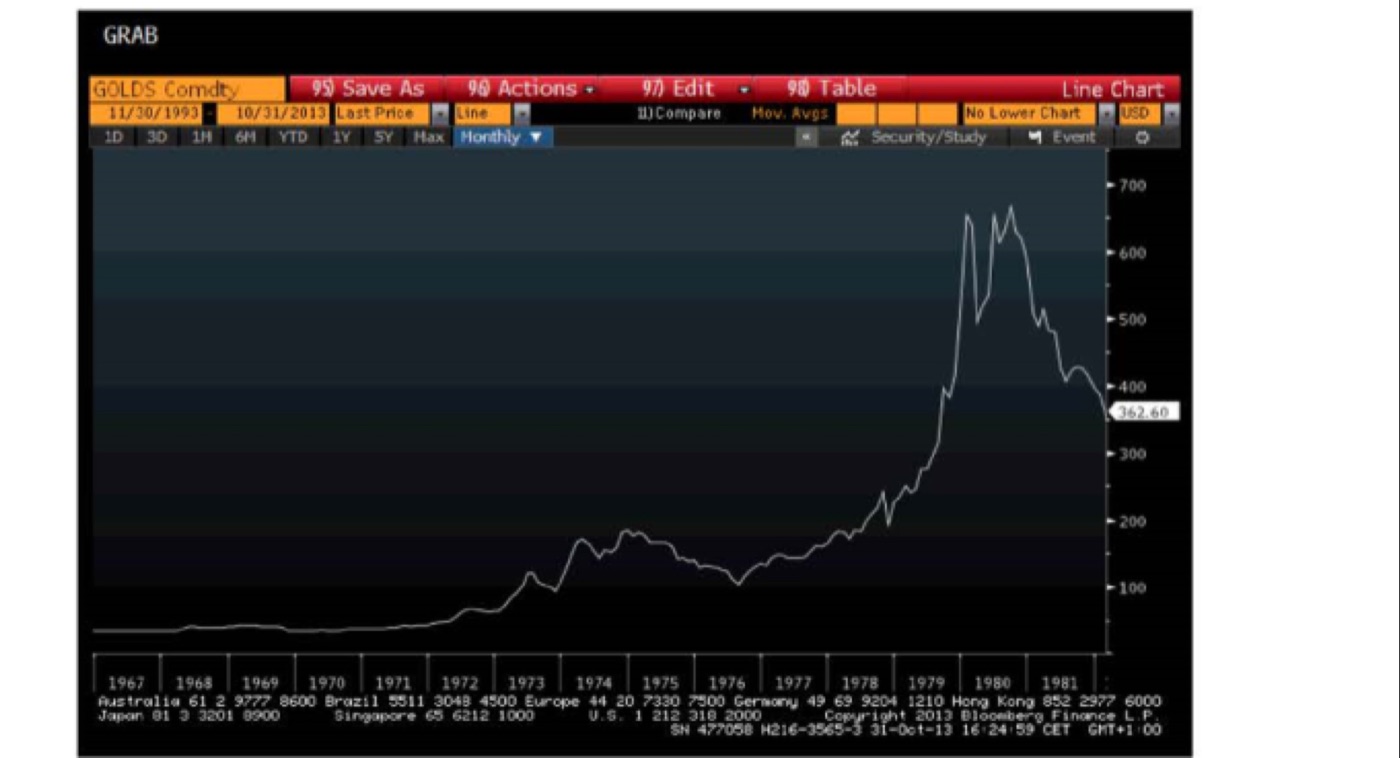
Now, when I saw the chart of BTC I knew it reminded me of something. And this bit is important. It looks just like the price of gold back in the 1950s to 1980s. The rise in BTC has been much larger in percentage so far, because it basically started its creation worth nothing, whilst gold had a multiple thousand-year history of value (but it too at some point was worth nothing).
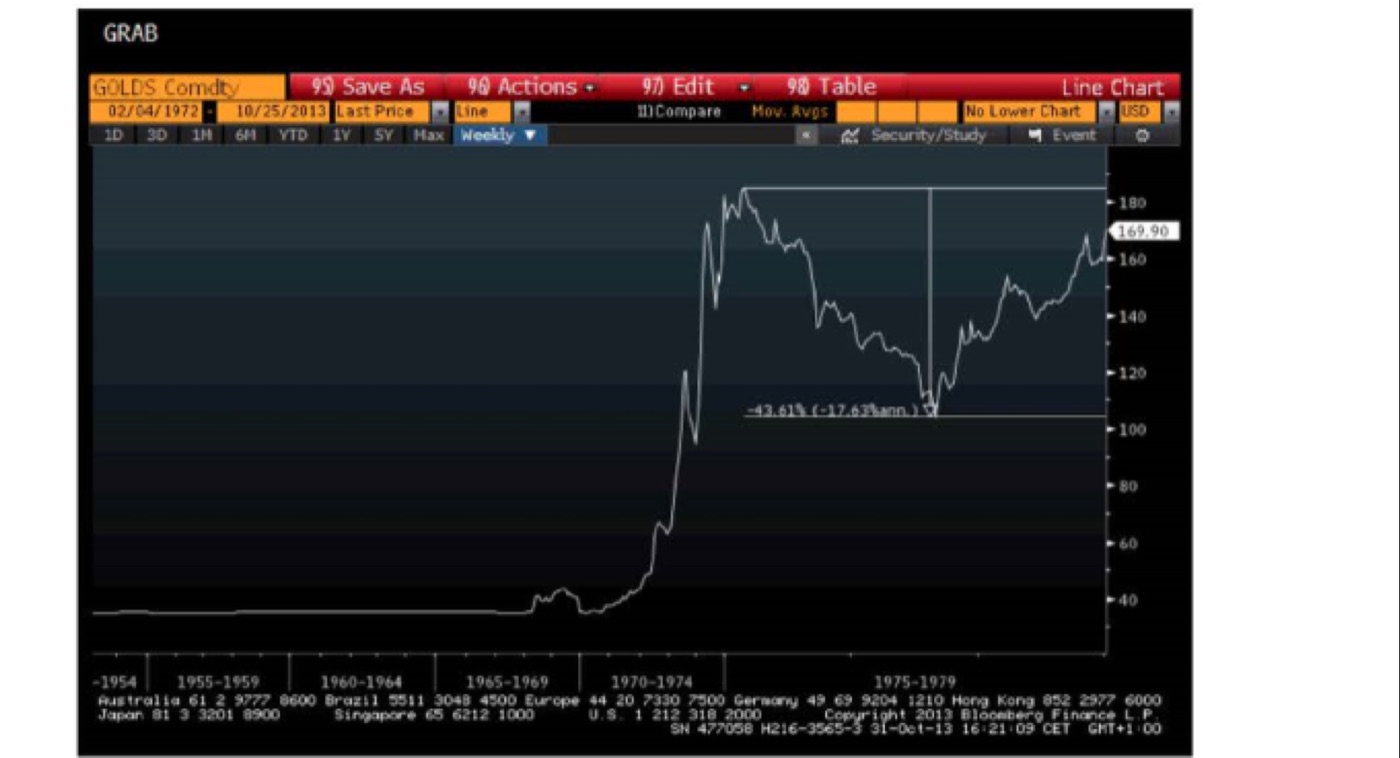
What happened to gold next is what I am interested in. Gold suddenly had real value in an inflationary world as Nixon left the gold standard. Gold exploded higher, further than anyone could forecast. People were desperate for gold. After that bubble, gold went down for years before exploding once more.
Why I find the gold analogy fascinating is that Bitcoin has many of the attributes of gold. Firstly, there will only ever be 21 million of them. No more can ever be created, which is part of the genius of the design. 55% of all Bitcoins in existence have already been “mined” – mining gets more and more difficult as fewer are left. This is just like gold, where 65% of all the world’s reserves have already been mined and the remaining reserves require higher prices to extract.
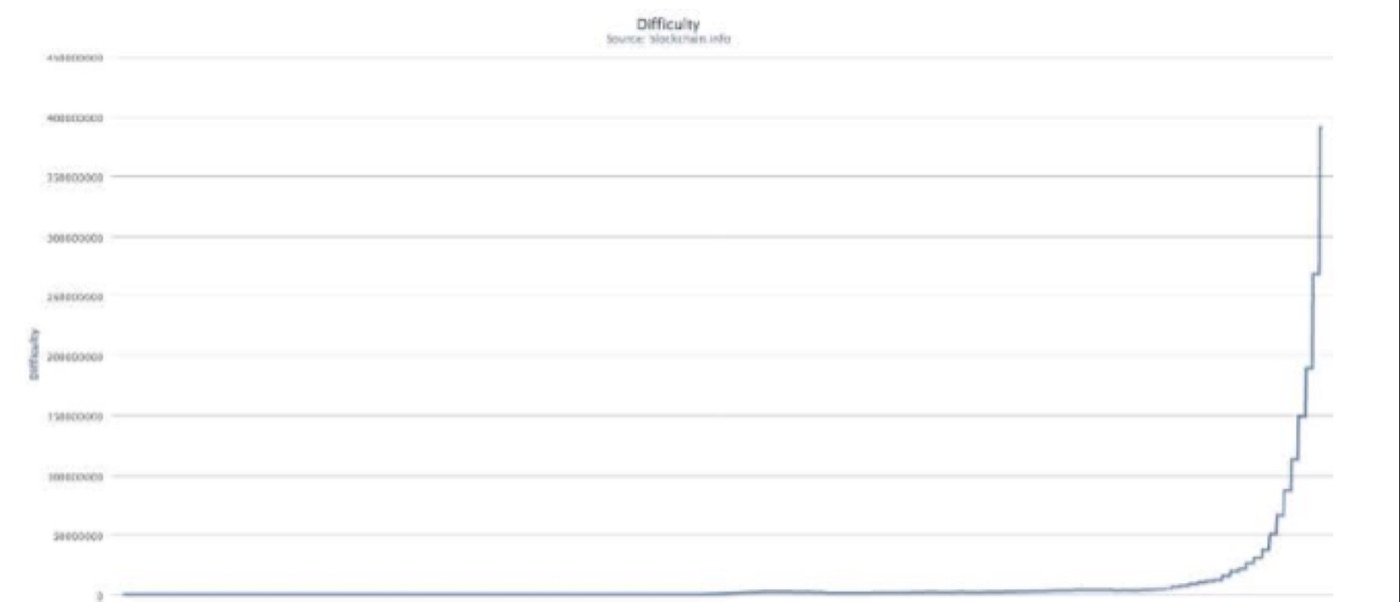
Meanwhile, BTC has switched from being a mechanism for some people to find an alternative to gold to something more of a transactional currency and a way around capital controls.
China love
In China, BTC use has been explosive. There has even been tacit Chinese Government approval on its use, with a TV programme dedicated to it. The Chinese are using it for online gambling and for getting around capital controls. Bitcoins exchanged into or out of RMB now account for 21% of all volumes (versus 65% versus USD and 6% versus Euro). The main Chinese Bitcoin exchange is now the third largest in the world. What is driving a renewed surge in demand is that Baidu, the most visited website in the world, is allowing one of its subsidiaries to accept payment in Bitcoin.
It’s just supply and demand
Thus we have a classic supply and demand imbalance in the making and acceptance is growing rapidly. I think we are in the take-off stage. OK, this all sounds good but what the hell is the fair value of such a currency? Again, we can turn to gold. If Bitcoin exhibits the same properties as gold – finite in amount, an exchange of value, transportable, and costing more and more to mine the remaining reserves – then it should have a relative value versus gold which is vaguely quantifiable.
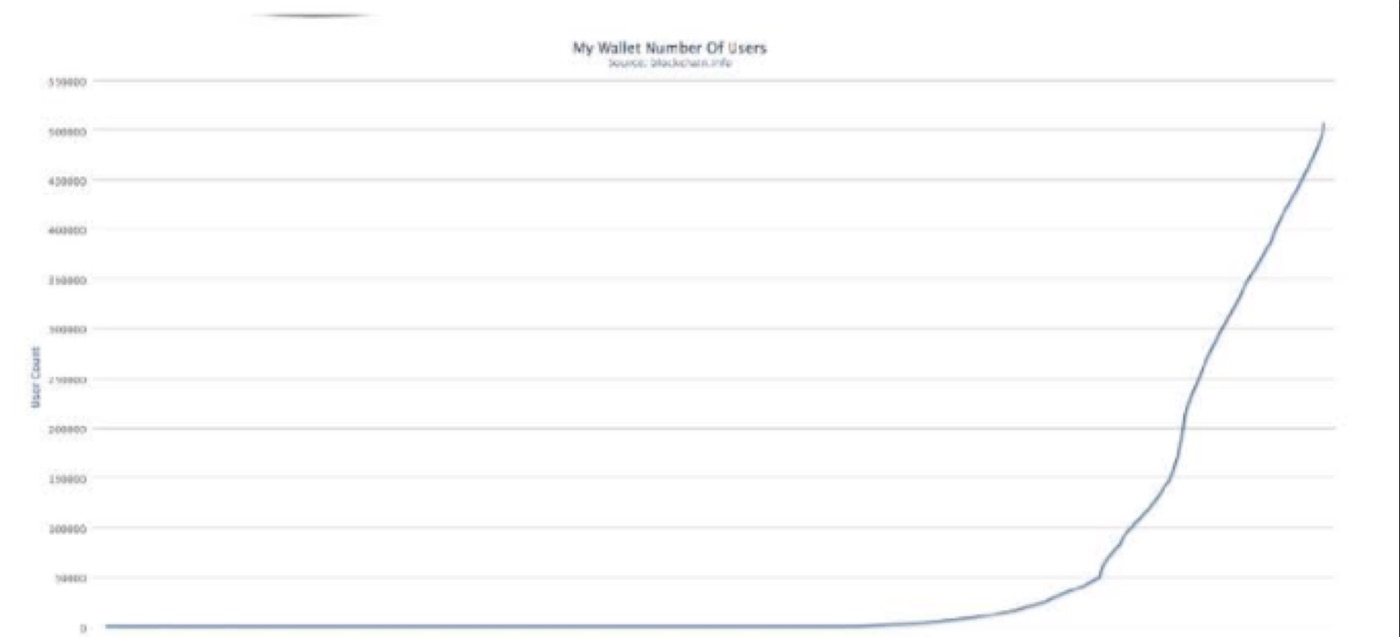
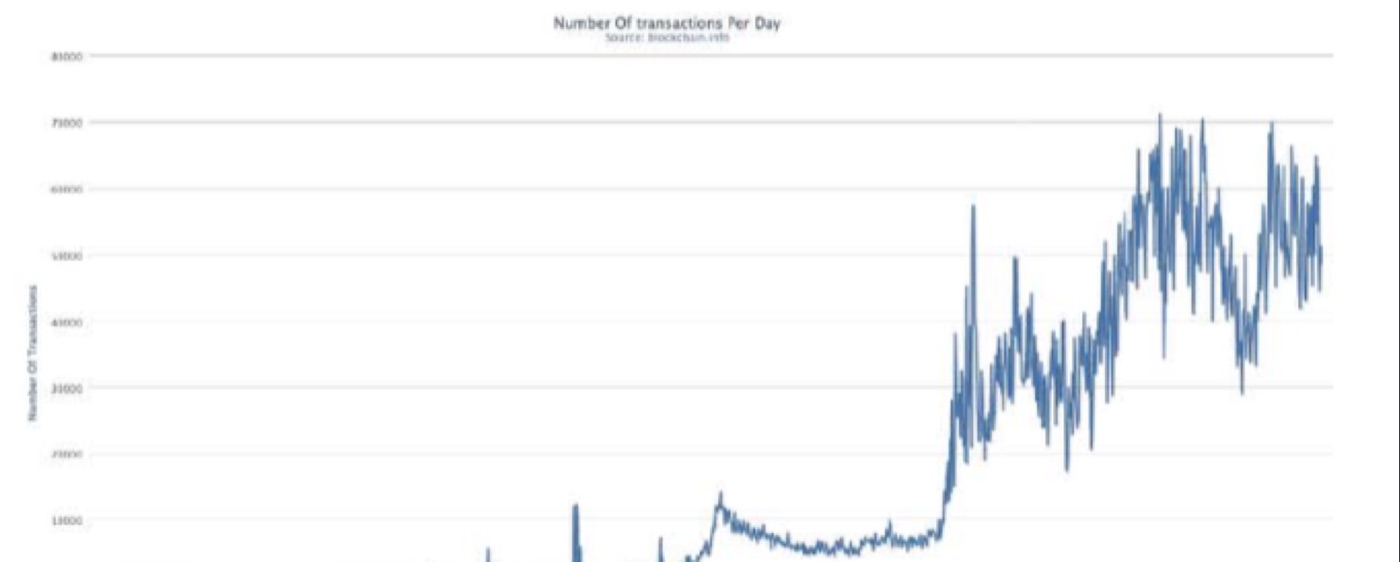
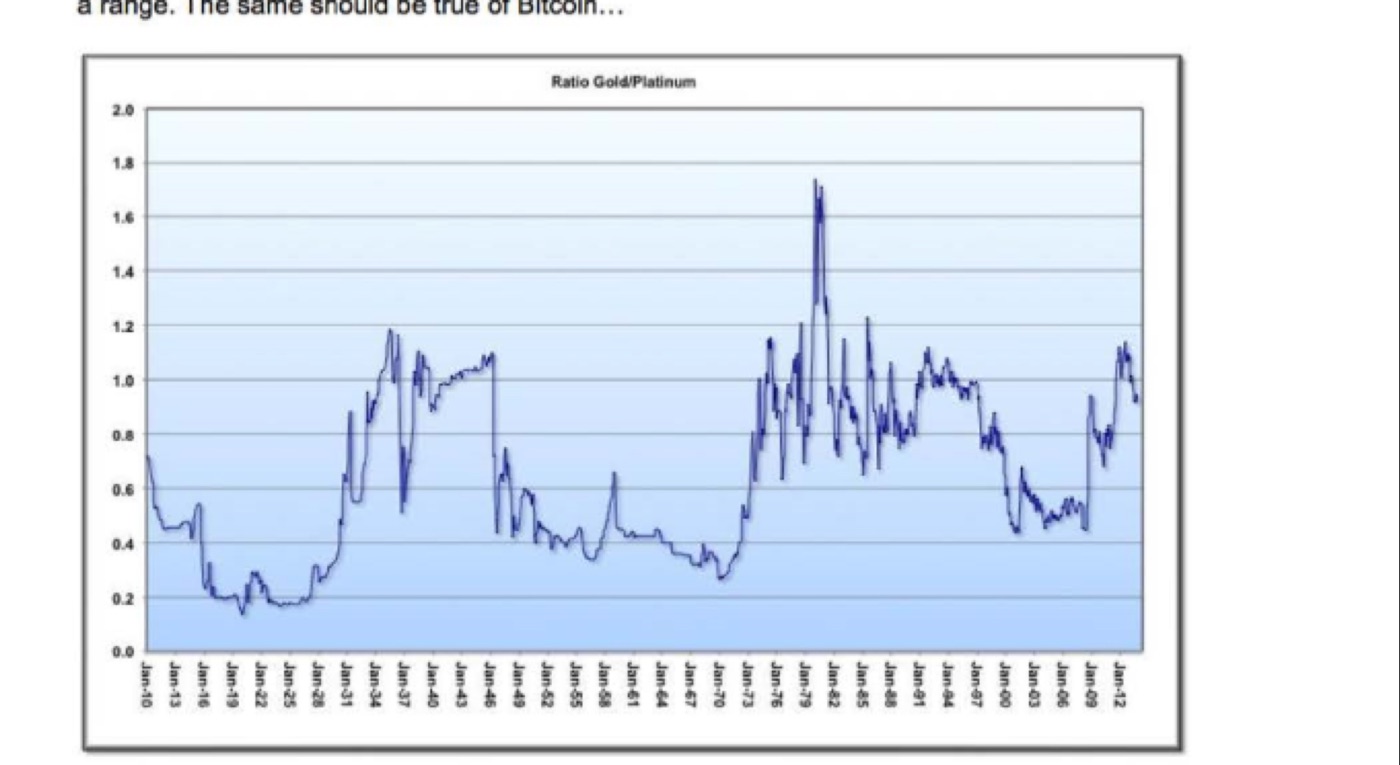
As I have shown over the years, all asset prices trade in broad bands versus each other. All assets have a relative value and always will (and must, to be an asset). You can see the obvious relative value from the chart of Gold versus Platinum – they trade in a range. The same should be true of Bitcoin. Taking into account that only 55% of all Bitcoins have been mined, versus 65% of all gold, the total stock of Bitcoins adjusted for the lower supply may well be equal to the same equivalent in gold.
A fudge, but not a stupid one
Look, this is far from perfect and a mathematician would be able to model it properly, but it is beyond my abilities. However, let’s use a broad guesstimate.
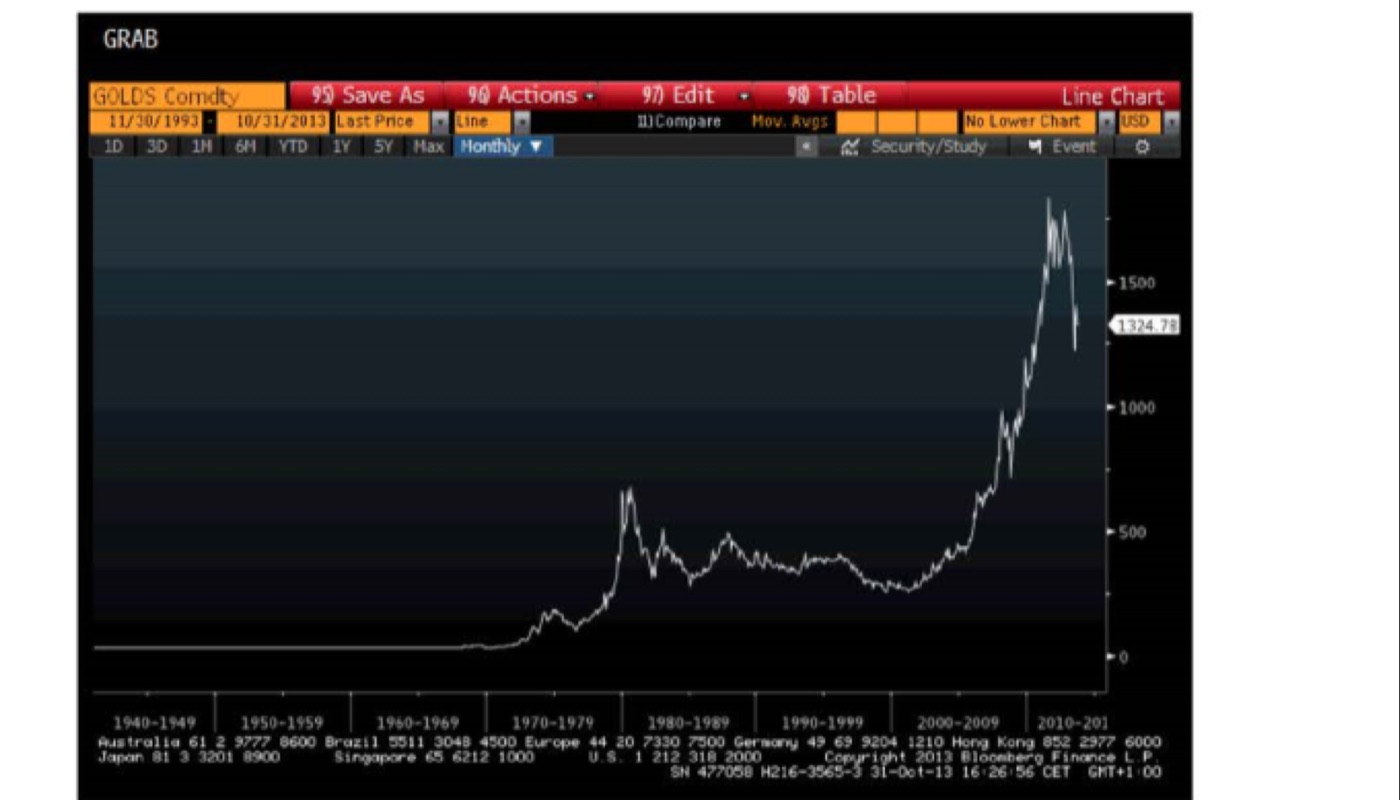
One BTC is currently worth 0.14 ounces of gold. That gives BTC an upside of 5,000 times to equal the current price of gold, supply adjusted. Before you shake your head, just recognise that gold has risen 8,750% versus the US Dollar since the 1920s, and that Microsoft rose 61,000% from its IPO.
If you stuck $5,000 into Bitcoins and each Bitcoin did go up to a gold equivalent of, let’s say, only 100 ounces of gold (not the potential fair value of 700), then at current prices your Bitcoin stash would be worth $3.3m. Now that’s what I call a tail-risk option. It’s either worth zero or it’s worth a truly outstanding amount of money. I bet you never thought you’d see this in a macro publication. But I’m serious. This just might work.
PART TWO
One Month Later
The call hit the spot. Almost immediately, the price exploded – up 480% in a month.
My article on Bitcoin last month seems to have hit the spot. Almost immediately the price of BTC exploded higher and then some. Patting myself on the back, I would suggest that this trade recommendation was probably the single most profitable in the history of GMI and possibly of all time, considering that only a month has passed. Bitcoin at time of writing is up an absolutely incredible 480% since our trade entry – my entry price was $210.
Although I think that BTC is going to go much higher over time, I think I’m going to have to take some profits just to help shore up year-end. I will transfer half the position to the long-term portfolio at entry price and take profit in the other half. In the long-term portfolio I won’t have the problem of annual mark-to-market – just entry price (which is how all investments should be, really). It will also allow me to add in due course.
I still think that BTC will be worth something north of $200,000, possibly $1,000,000, but for now I think the rise is enough – although the future potential is the reason why I want to keep hold of it in the long-term portfolio.
What is also interesting about BTC is that the ownership has widened significantly over this rally. This is the precise reason why the cryptocurrency will succeed. As more and more people buy BTC and hold it, then any new entrant will force prices higher due to an even more restricted supply. Demand is currently massively outstripping supply.
The anti-fiat fiat currency
This is the exact opposite of other fiat currencies, which tend to see more supply over time and see their purchasing power diminish, and is the inherent attraction for Bitcoin. There are arguments against Bitcoin which come from the gold bugs suggesting that BTC has no intrinsic value. This is clearly misguided thinking. Gold has no intrinsic value of note. Its value is derived from people giving it a value. If we give BTC a value then it has a value too.
It’s in addition to gold, not instead of
It is also not there to replace gold. It supplements it. As we all know, there are multiple stores of value in the world – art, classic cars, diamonds, luxury property. There is room for more, and there is certainly room for one which is instantly tradeable and exchangeable, which is part of the beauty of Bitcoin’s design.
The future’s so bright you gotta wear shades
After my article was released last month, I received numerous emails from serious investors who are all involved in building out the future of Bitcoin. There are several groups building institutional investment vehicles for BTC – ETFs and other funds. Many VC groups are funding new developments. New money and plenty of brainpower is being pumped into the success of the currency and the platforms. There are new trading platforms and exchanges under development that will eventually make Bitcoin as easy to trade and arbitrage as futures contracts are today.
For me, the future of Bitcoin is bright and shiny, like that of gold. We are in this now for the long run.
PART THREE
An Entirely New Financial System
Six months on, at the Cayman Round Table, the thesis stops being a trade and becomes something far bigger.
The following morning, I kicked off the proceedings with probably the single most ambitious idea presentation I have ever made (and that’s saying something). I introduced all the broken parts of the financial system and demonstrated how the same reoccurring problem – centralisation and concentration of power – is the root cause of the issues that we face. I then outlined specific, step-by-step actionable solutions, illustrating how creating new stand-alone decentralised parts of the system will offer HUGE financial rewards. There is pent-up demand for all of these, but no supply.
Vive la révolution!
To give you one example that has already happened – think no further than HFT. Many people established that high frequency trading firms were front-running clients. The system was broken. In stepped Brad Katsuyama. He tried to change the old system and soon realised the system could not be changed due to massive vested interest. Brad did not give up, but did exactly the right thing, which was to set up a separate system entirely – a new exchange called the IEX.
What is evolving in front of our eyes is the biggest revolution many of us have seen since the civil rights movement. It is, and will be, a version of libertarianism based on establishing decentralised systems with no vested interest and a level playing field – a system outside of a system.
Bitcoin
The presentation on Bitcoin completely and utterly blew everyone’s mind. After the talk, I am now utterly convinced that this is the single biggest tech development since the invention of the Internet. “What? A digital currency is bigger than the Internet? What a load of old rubbish!” I hear you say. This is where I, and everyone else, was proven – oh, so wrong.
Simply put, Bitcoin is two things: Bitcoin and bitcoin. Bitcoin, with a capital “B”, is the decentralised secure electronic ledger of all bitcoin (the currency) transactions. The miners lend out usage of their computing power to the Blockchain or Bitcoin network, which needs beyond-massive computing power to record and verify all transactions. The rewards are the bitcoins they mine. It is a very neat reward-based, decentralised system to give unlimited computing power. However, this is the tip of the iceberg.
The world’s ownership ledger
The developers initially thought that the prize was a new currency and a cheap payments platform. The media has just about caught onto that. However, Bitcoin is in fact much larger. So large, in fact, that it is almost impossible to hold the thought in your head.
Bitcoin is nothing but a gigantic, anonymous electronic ledger that captures and records the ownership of bitcoins.
However, once you realise that ANYTHING can be recorded as long as it is attached to a bitcoin, then you have a time-stamped, decentralised proof of ownership of EVERYTHING.
If you attach a contract to a bitcoin, you can record what the contract says (that you are the owner) and a time-stamp to prove when you made proof of ownership. The Bitcoin system will then verify it multiple times to prove the authenticity. This would act, at first glance, like an electronic notary service of all contracts.
But that ain’t nothing compared to the next bit. Imagine a world where every single insurance contract, derivative contract, housing deal, property ownership contract and proof of purchase can be stored in a decentralised manner – no single company controls it, in fact no one does, just like the Internet. The bitcoin world has suddenly grasped that this is going to be possible.
A new global custody system too
However, I know something that they don’t, and that is the world desperately needs a decentralised proof-of-ownership system for the financial world – taking the power away from the murky, vested-interest, undercapitalised, re-hypothecating, pooling-of-assets cesspool of a custody system that is at the rotting heart of our broken financial system.
Bitcoin can tag, record and verify the ownership of every stock, bond and security, along with every derivative contract.
Bitcoin as a system not only can, but will form the basis for an entirely new financial system – destroying leverage and the re-use of collateral in the process, and creating a much, much more stable financial world.
Going up!
So what does it mean for the currency, bitcoin? For this system to work, every record needs to be attached to an amount of bitcoin. Thus all transactions will require bitcoins, and as a result bitcoin will be worth a hell of a lot more than it is now – in fact many multiples of the current price and, in my view, maybe even a thousand times the price it is now (don’t forget the smallest tradeable fraction of a bitcoin is eight decimal places).
This is because there can only ever be 21 million bitcoins, and therefore every user is going to compete for each one of the eight decimal places of a bitcoin to get their place on the ledger. Demand for bitcoin is going to be stratospheric.
This is beyond massive. The Bitcoin framework is not yet ready for this, but that is where it is headed. As Marc Andreessen recently said – Bitcoin is like the Internet in 1993. If you still think it’s a Ponzi scheme sham of a fake currency based on thin air, then you are beyond saving.
Bitcoin. I get it. Do you?
Membership
Read GMI for yourself.
Twenty-one years of calls like this one, and the positioning each month. Explore the research, the platform and the membership options.
Explore membershipRequest preview access