Best of GMI · the ten canonical essays · 01 of 10
THE INAUGURAL THESIS · 2005
The Death of G7 Macro.
Demographics, the stampede for yield, and the slow death of the developed-world trade – the framework GMI was built on, in Raoul’s own words across its first year.
FROM THE GMI ARCHIVE · EXCERPTS
EXCERPTED FROM THREE 2005 ISSUES OF GMI:
MONTHLY · 31 JANUARY 2005
UPDATE · 7 JUNE 2005
MONTHLY · NOVEMBER 2005
PART ONE
The Slow, Painful Death of G7 Macro
The thesis that launched GMI, laid out in the very first issue.
It’s not exactly the title you’d expect of a global macro research piece, and especially not from a new product launch! However, I do mean it.
I might as well start by laying down a few cards on the table and outline some of my overall macro framework. Some of you might agree with it but I’d guess there is a large group who won’t. But I hope you are not reading this just to agree with everything but as more of a platform to drive debate and generate broader understanding and generate ideas that make money.
Blame the boomers…
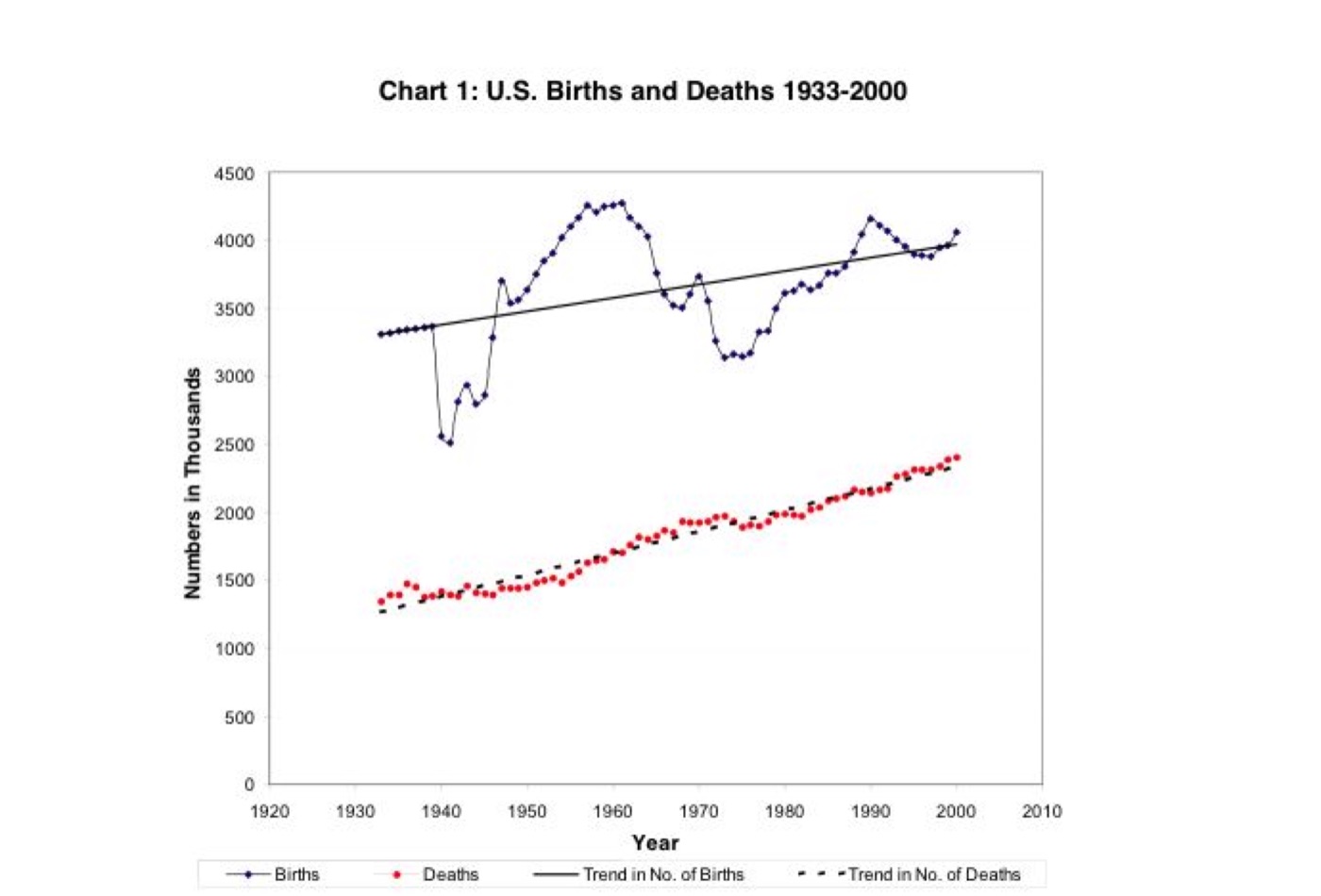
I believe that the aging of the post-war baby boomers is a much larger and more important issue currently than most people acknowledge. The majority of work has concentrated on the impact on social security systems or healthcare but ludicrously limited analysis exists on the impact on financial markets.
Additionally virtually all major studies concentrate on the retirement peak of the baby boomers around 2015 to 2022, depending on which country you choose, and therefore conclude that it is an issue to plan for in the future. This is simply not the case. Any investor knows that once all the bad news is in then things can only get better by definition.
The real issue is that the early boomers started to edge into retirement in 2000 and do so at an ever-increasing rate up to the peak year. What initially started as a slow trickle will turn into a biblical-style flood. The only point that needs to be understood now is that this is happening right here, right now.
Bonds are a girl’s best friend – the stampede for yield
So why is this bringing about the death of G7 macro? Simply because retirees need income once they stop work. Generally speaking people have monthly fixed outgoings and need a fixed income to offset this. When you work that role is usually played by your basic salary, while in retirement it is substituted by fixed income investments. Capital gains are the other option but carry significant risk in your later years.
In other words everyone becomes a bond investor. Although governments globally issue huge amounts of debt this is being more than offset by the increase in demand. This is the simple piece of the jigsaw that everyone who shorts JGB’s in Japan keeps missing.
Bond yields will stay abnormally low until the boomers stop buying fixed income and that’s not for at least a decade, possibly more.
Now here is the real hook. At this point in the retirement cycle we are rapidly running out of yield income. Think of it this way: if you retire today you can guarantee a 4.2% yield for the next 10 years. If however yields fall from 4.2% to 3%, which I think is the next phase this year, then you will need 30% more savings to retire in one year’s time! That is staggering. If like Japan and Switzerland, yields fall to 2% then you will need to get twice as rich and pretty damn quickly too…
The net result is that there is a stampede for yield. That is why all your bond calculators keep giving you higher fair values. That’s why the simple rules of thumb like 10 year bonds should roughly equal notional GDP don’t work anymore. Remember momentum investing? That’s where we are right now with bonds.
How do you make any money…?
This all sounds like a great way to make money but the reality is much harder. Yes we should all be long bonds but a 2% yield move in bonds really isn’t that heroic. What I’m trying to say is we are one business cycle trough away from Japanese type yields.
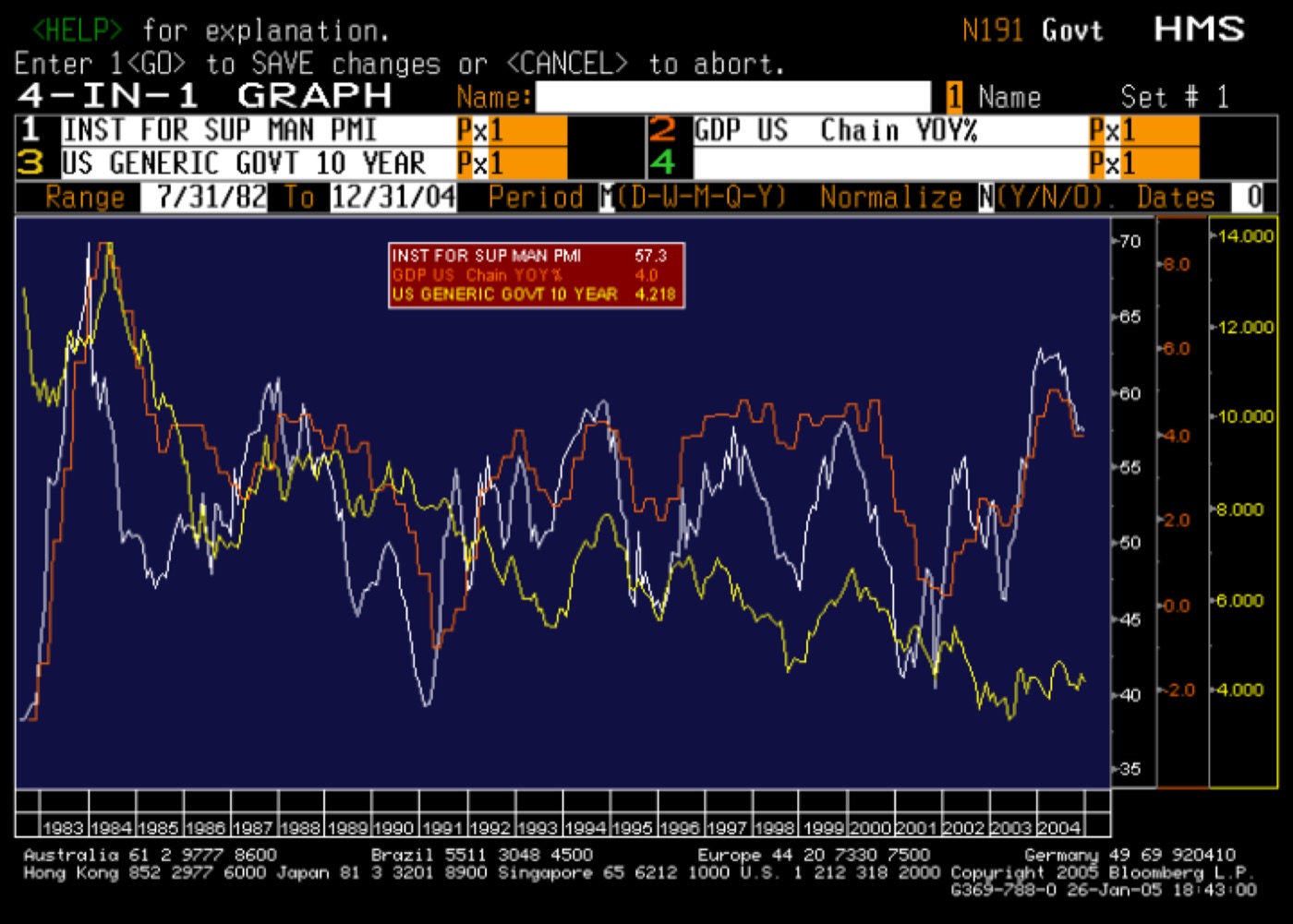
In my opinion yields are going to fall via 3 mechanisms: demand, disinflation or slower growth. Hardly Einstein’s theory but there again things aren’t always that complicated. Needless to say I think we hit the peak of the business cycle, as defined by the ISM survey, last Jan to May. Bond yields are likely to fall to a very low level in the next two years and due to demand will likely stay there.
Too many cooks spoil the broth
The net result is that the amount of participants in G7 global macro via hedge funds or prop desks is way too big considering the size of the opportunity. We probably are close to the largest ever available capital for G7 macro but with the smallest set of opportunities…
The magic cycle
Additionally one must understand that the largest determinant of returns for macro investors is the business cycle. Using hedge fund data going back into the 1970’s one can see that macro funds and CTA’s make the majority of their returns when the business cycle is falling.
In essence it is simply because the largest sustainable trend we have witnessed is falling yields and falling inflation (both due to baby boomers). We are nearing the end of this particular gravy train much as we did in Japan by 1995.
The dollar down trade…
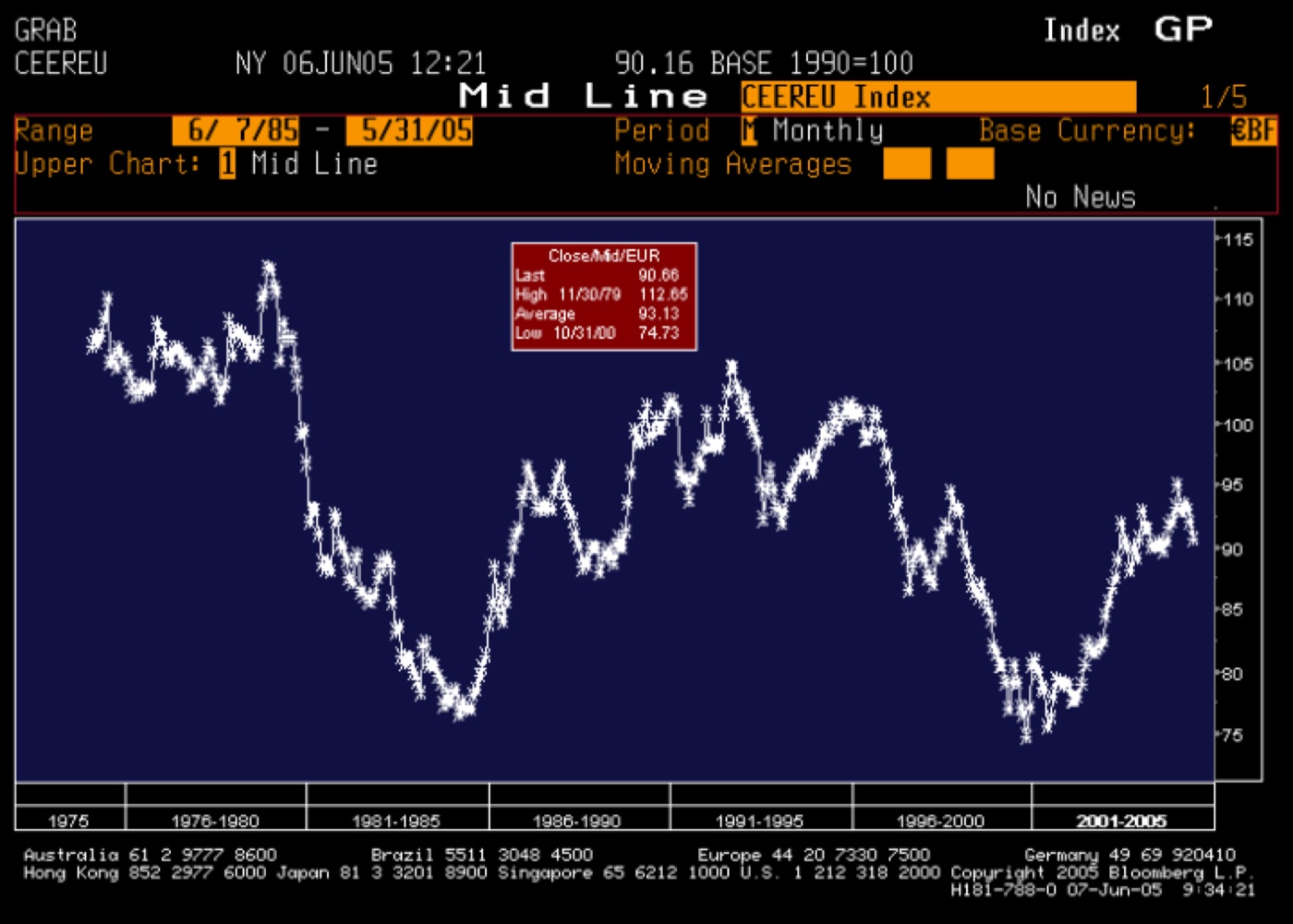
In my view the only other major macro trend that is out there in G7 is the fall of the dollar. Again this is a huge driver of profits for macro investors but ask any participant and they will tell you it’s getting harder to trade due to the wonders of monthly NAV restrictions of funds and the fact that the Euro, Aussie, Kiwi etc aren’t exactly as cheap as they were.
If you are a G7 macro player you are left trading the JPY as a proxy for Asia where the real value lies. Again, we will probably get some decent action here but how much and how far and against how many other guys do you have to compete? It doesn’t sound like the road to the holy grail of 20% to 30% returns.
Erm… what’s left?
So what are you left with? Equities, a notoriously tricky macro instrument, or commodities which not many people have a mandate to do in a macro environment. The real truth is that most people trade only G7 fixed income and FX in order to generate a vast majority of their returns. Even those of you who have multi-diversified businesses are more than 70% G7.
Monthly madness
G7 macro is going to die a slow painful death of returns and monthly NAV reporting is the nail in the coffin. With very few exceptions the time horizon for trading or investing has collapsed in recent years. The fund of fund community has brought this about by demanding monthly liquidity or at least monthly reporting of NAV’s (the new vogue is weekly reporting!). Most hedge funds have to manage their return so as not to disappoint these investors, therefore trading takes place on a 2 week to 1 month horizon and longer term investing is out the window except for the few lucky ones.
Global Macro is what exactly?
Global macro by definition is to take advantage of trends and/or imbalances in the global macro economy. These things are not short term and can hardly ever be captured within 2 weeks! It is like fighting with your hands tied behind your back. There are opportunities everywhere in global macro but you simply won’t make the most of them if you have to concentrate on 2-week trades.
Ain’t too proud to beg!
I will end the first article with this. I beg you to reconsider how you trade global macro. Do anything in your power to avoid having to report monthly NAV’s, opt for lock-ups if you can, and most importantly please diversify out of G7 fixed income and foreign exchange. You will likely only disappoint yourself or even worse lose your job if the day of reckoning comes (where are all the Japanese bank JGB traders or all the Mark/Paris spot guys?).
The same is true for you sales guys. Think about where you make money now and whether you could still earn the same living if things pan out as I think they might. It’s time to re-tool your businesses. That’s the gruesome bit over and done with. I thought it was the single most important thing to say in the first edition.
The King is Dead… Long Live the King!
If G7 Macro is dying, where are the opportunities to make money? I think the bulk of returns over the next decade or two will come from what we now call emerging markets. It is amazing how liberating for smaller economies, and what a pick-up in capital flows there will be, when there is no opportunity to make money (especially yield) in developed economies.
The pensions industry is slowly being forced further out the curve to generate their 7%. If G7 bond yields are around 2% to 3% then we will see enormous floods of money into other regions regardless of the economic story.
Outside G7…
Right now there are two types of opportunities: G7 piggy-back trades such as Taiwan, Korea etc where domestic fundamentals take more of a back seat; and secondly the once-in-a-generation type investment opportunities that lie in places like India, Russia, Turkey and China, or in themes such as the Islamic country baby boom. These are going to be as big themes as US stocks and European bonds were in the last 20 years.
Outside of those ideas there is one enormous buying opportunity in soft commodities. The US and Europe have paved over fields to buy houses and shopping malls as better returns were available there. There has been no investment for 20 years at least. All of this is occurring when India and China are becoming net food-importing nations. Light the blue touch paper and stand back. The same story is equally true in energy, which is just starting its move.
Inside G7…
Finally, although I’ve just spelled out the death of G7 macro, there clearly are some very decent opportunities if we are quick and we get the right timing signals for trade entry. Equity markets will become more cyclical as they have in Japan. They are great trades when they happen and you get the turning points. Bonds are a great trade if you can catch them and the dollar short is still superb on a risk-adjusted basis over time.
PART TWO
Golden Years
The first trade recommendation born directly of the thesis: buy the one currency with no debt attached to it.
This is going to be a pretty short note as today’s trade recommendation is the part of the Death of G7 Macro idea that I have discussed at length over the last 6 months. Essentially for many years I have held the view that the main three currency trading blocks are an “Ugly Parade” between three problematic economies, each hampered by the “bad side” of the demographic cycle in a unique way.
Japan, US or Europe… the three ugly sisters
Japan has a population 10 years older than the other two, enormous government debt and a stunningly slow rate of growth. Its only saving grace is that the populace has saved up enough money for a rainy day. The Government’s moral obligation is to continue to print money to smooth out this very long transition period.
Europe has a similar set of issues: an aging population, increasing budget deficits and a collapsing trend-rate of growth. Its only saving grace is again that the population has also saved up a decent amount of money for a rainy day.
Finally, the US has also an aging population combined with a huge budget deficit and current account deficit. Its populace has saved no money for a rainy day. Its saving grace is that consumption, through the increase in debt, has remained more robust and has thus kept economic growth higher than its peers.
How rational are you?
I’m probably not telling you anything you don’t already know, but it is always interesting to step back and look at these areas together. A rational investor would not choose to invest in any of these in the medium- to long-term. We also know that things are likely to get worse and not better. Demographics are progressively getting worse along with the debt burdens that come with it.
IOU… a bucket full of debts
What is interesting is that not many people really understand what a currency is. It is an IOU by the government to the holder of that currency. Exactly what it says on the bank note.
Now cast your mind back to when everyone was starting to realise that the Dollar might weaken. We reached the tipping point where the size of the twin deficits became a concern for investors. The same happened when the Yen began its weakening trend. The point is that these currencies started their major declines when debt became a problem. Now we have an unusual situation where all three currency blocks are having to issue more and more debt.
Anyone want to pay for this rubbish??
The supply of these currencies is huge and it is outstripping demand. Simply put, there are not enough buyers of these currencies to allow prices to rise. I have been expecting this for a long time.
A nice way to lose money – the G7 House of Pain
Much like my discussion about bonds in the last monthly, we are clearly approaching the Death of G7 Macro in FX too. Yes, they will all move relative to each other but the trends are unlikely to last and are likely to get whipsawed a lot. Think of $/JPY and then think of the same sort of thing in Euro/JPY and Euro/USD. Nice way to lose money. Low vols and ranges. Yuck… that’s not for me. I hate these kinds of markets. P&L hell.
Again, the usual caveat applies. Don’t expect this all to happen overnight, but being cognisant of the long-term trend can help you make money or stop you losing it at the very least. Over time we will pan all this out, moving our analysis and investments to other countries and regions where opportunities are easier to come by and the playing field is less crowded.
On to the shiny stuff…
Getting to the point, there is one currency against which you can judge all others. It is the only currency that has no debt attached to it. The flip side is that it doesn’t have much growth attached to it either. But it is a measure against which we can make sense of things. Gold.
Gold has a pretty well proven track record as a long-term store of value – well, actually about 7,000 years. I think it has at least some credibility. I use gold, not out of love, but out of a need for any sort of long-term measure of money. Using Gold is a pretty handy measure of how a currency is doing in its own right, sort of like a trade-weighted index without the politics.
The JPY has been weakening against Gold for 6 years now and that’s during a period of Dollar weakness. It is only a matter of time before Gold strengthens quickly against the JPY, and against the Dollar and the Euro things are hotting up too. Also bear in mind that with globally low interest rates there is limited advantage in the carry differential over gold lease rates.
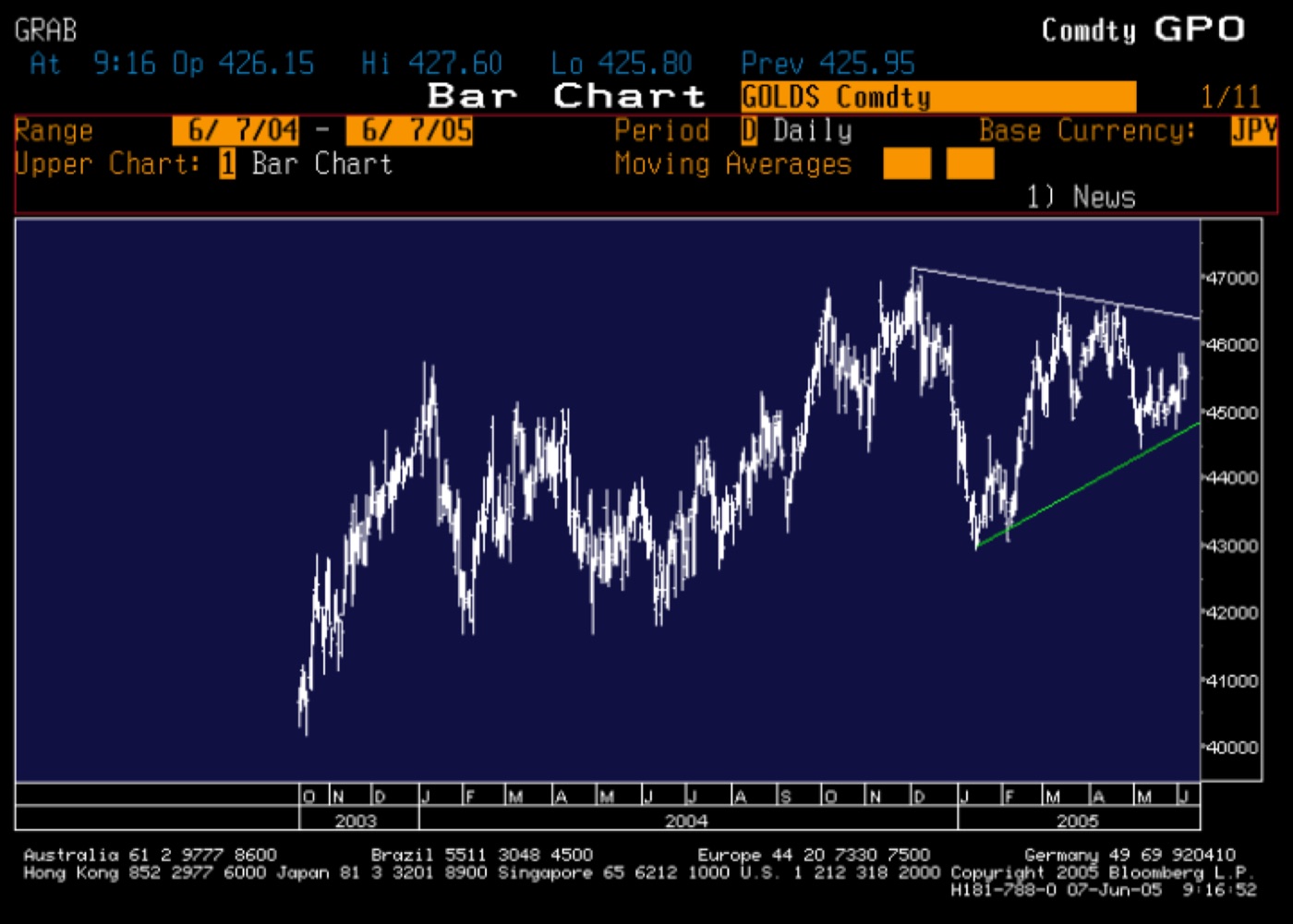
People have been waiting many years for this trade and it is happening without any comment. Sounds like perfect timing… The Death of G7 Macro may be the start of the Golden Years. We should be in this one for the long run.
PART THREE
Death of G7 Macro, Yet Again
Ten months on, the first hard evidence: the “new” world had already left the G7 behind.
I thought we’d step back from the fray a little this month and take a look at one of our secular themes.
Over the course of this year I have hopefully introduced you to the concept of the Death of G7 Macro. G7 is a world of massive economic imbalances, appalling demographics and peaking geopolitical influence. I have talked about this many times in the past but I now see returns in the G7 countries beginning to dramatically under-perform those of the “new” economies being led by China, India and, to some extent, Russia.
… and the future of Global Macro
Additional exciting opportunities will be the move of other countries to “developed” market status and thus a re-rating of their valuations. This will include Hong Kong, South Korea, Taiwan, Singapore, Poland, Hungary, Cyprus, Czech Republic, Estonia, Latvia, Lithuania, and potentially Dubai, Oman and South Africa.
In the coming years and decades I expect the G7 currencies to generally under-perform, their bonds to offer lower returns and their equity markets to be dead money. Let’s look at the evidence so far…
Let’s look at the evidence so far…
It is never easy to take a snapshot of any particular year and ascertain whether the secular trend has started to take hold. However since 2000, when the equity market peaked, we can get a decent idea as to whether this trend is really happening. People are often so focussed on the ‘old order’ that it can be some time before they catch on to the changes that have occurred in secular trends.
| Since 2000 | YTD | |
|---|---|---|
| The G7 majors | ||
| S&P 500 | −14% | +4.5% |
| Eurostoxx | −29% | +18% |
| Nikkei | −21% | +30% |
| The “new” world order | ||
| Chinese H-shares | +159% | +7.8% |
| India | +80% | +36% |
| Russia | +254% | +58% |
| The new group of “developed” nations | ||
| South Korea | +26% | +44% |
| Hong Kong | −11% | +6.1% |
| Taiwan | −26% | +1% |
| Singapore | −6.9% | +12% |
| Poland | +86% | +27% |
| Hungary | +149% | +49% |
| Czech Rep. | +186% | +36% |
| Estonia | +438% | +50% |
| Latvia | +311% | +55% |
| Lithuania | +591% | +59% |
| Dubai | +1097% | +156% |
| Oman | +93% | +43% |
| South Africa | +101% | +37% |
Currencies and bonds too…
It is not easy to look at currency outperformance since most of the countries listed are pegged in some form to the Dollar. I do expect that to change over time but very slowly, which will allow many of these currencies to steadily strengthen. I realise the figures shown are only equity market data, but it is much harder to illustrate the same in bonds due to the different level of market development. Needless to say, EMG bonds have whipped the US and G7 in the last few years.
It is some of the Asian markets that I wish to discuss at more length. I believe we are in the early stages of major secular bull markets – secular in the multi-decade time-horizon. These markets, which can no longer be called “developing” or “emerging”, should now be moving towards developed valuations.
The King is Dead. Long Live the King. The Death of G7 Macro was never an ending – it was the map to where the returns went next.
Membership
Read GMI for yourself.
Twenty-one years of calls like this one, and the positioning each month. Explore the research, the platform and the membership options.
Explore membershipRequest preview access